Movement, water and why walking helps more than it should
The lymphatic system has no pump of its own; it borrows yours. That one fact explains why walking, and moving in water especially, does more for lipedema than its gentleness suggests.

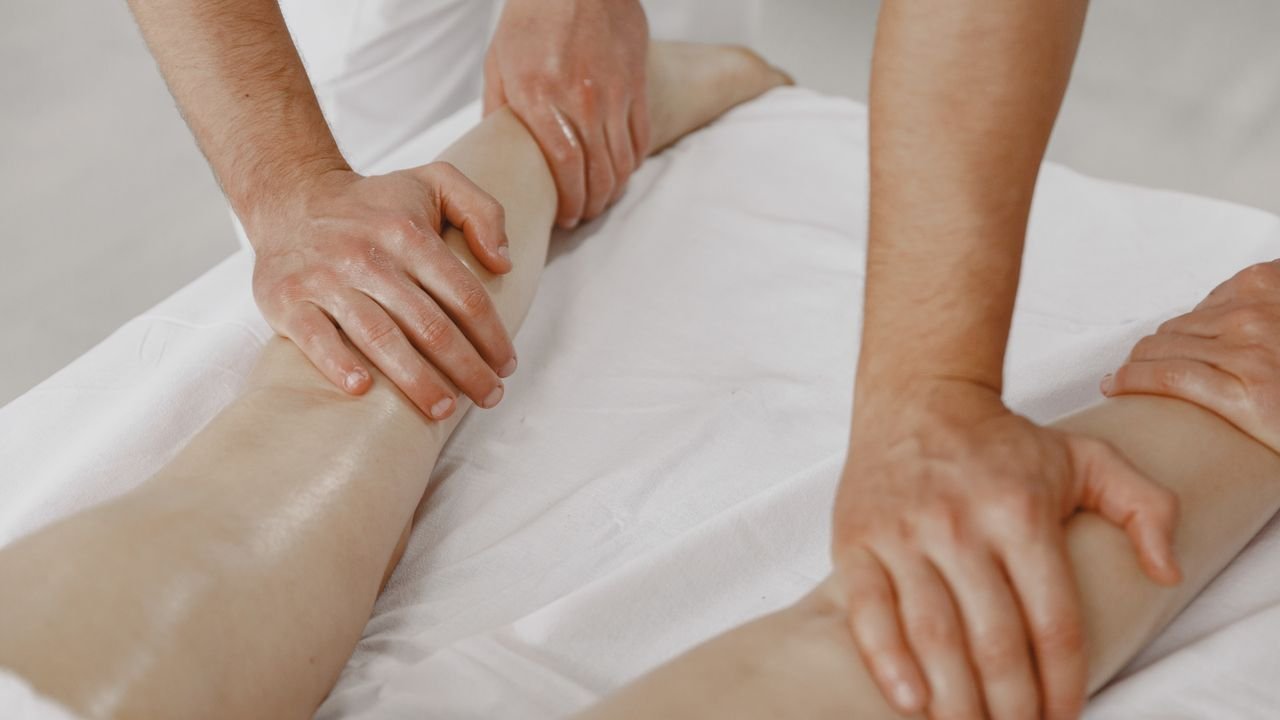
Photo: Shvets Production / Pexels
Of everything recommended for lipedema, movement is the cheapest, the most available, and the most often described in a way that makes women with painful legs want to give up before starting. So let us be precise about what actually helps and why, and about how little of it you need to begin.
The one fact that explains the rest
Your blood has a pump: the heart. Your lymphatic system does not. It moves fluid using the muscles around its vessels — every time a muscle contracts, it squeezes the lymphatic vessels running through it and nudges fluid along. This is called the muscle pump, and it is not a metaphor; it is the actual mechanism.
For a condition defined partly by fluid that will not drain, that fact is the whole argument. When you walk, your calf muscles are pumping lymph out of exactly the tissue where it accumulates. When you sit still all day, that pump is off, which is why legs feel heaviest on the least active days. You do not have to exercise hard. You have to contract the muscles, repeatedly, gently.
Why water is close to ideal
Moving in water does two useful things at once that no gym session can:
- The water itself is compression. Hydrostatic pressure presses evenly on the whole submerged limb — a full-length compression garment you do not have to fight your way into, and one that gets stronger the deeper you go.
- It removes the weight. Buoyancy takes the load off painful, heavy legs and tender joints, so you can move in a way that hurts on land.
Add the cooling effect — genuinely valuable in an Egyptian or Gulf summer, and pleasant on inflamed tissue — and gentle swimming, walking in the shallow end, or any water-based class is close to a designed-for-purpose lipedema exercise. If a pool is reachable at all, it is worth the effort of getting there.
On land, without setting off a flare
The mistake is starting like someone training for something. Overdo it and lipedema tissue can flare — more pain, more swelling — which teaches you that exercise is the enemy. It is not; too much too soon is. Gentle, regular and sustainable beats intense and abandoned every time:
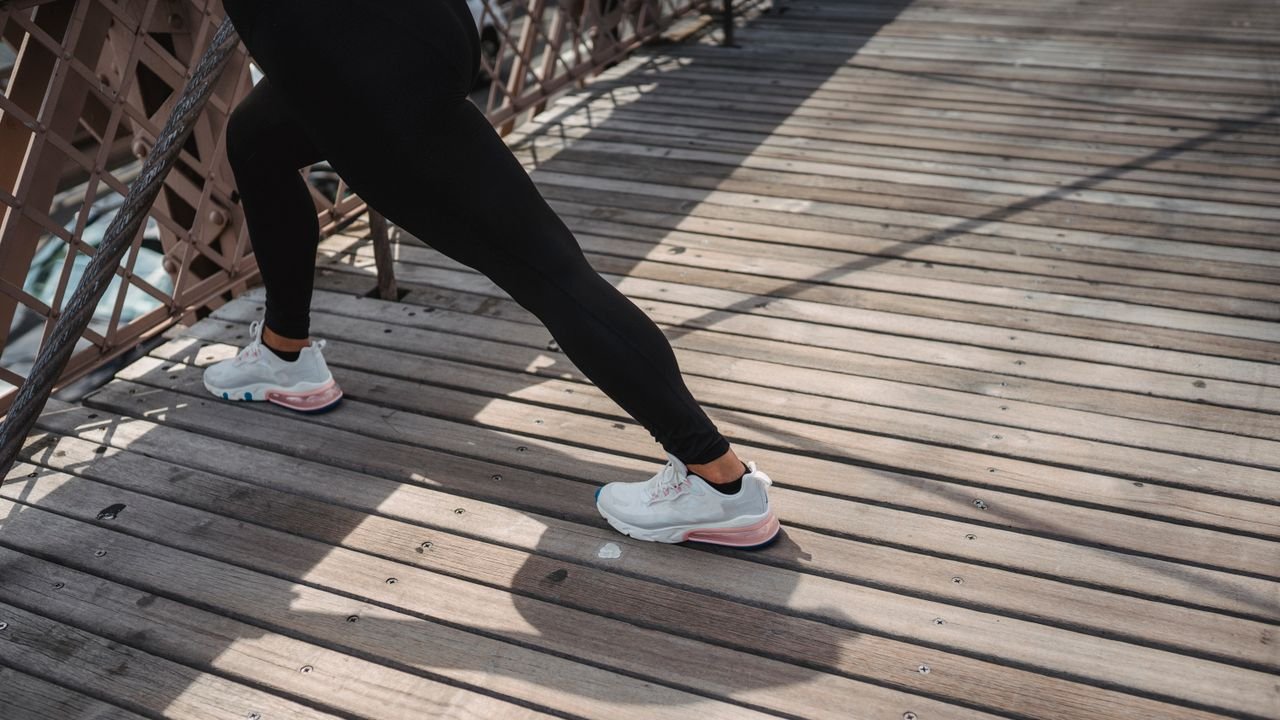
- Walking is the whole foundation. Start with what is genuinely easy — ten minutes — and add slowly. In wearable weather, walk earlier or later to avoid the peak heat.
- Wear your compression while you move. The garment and the muscle pump work together; this is when compression earns the most.
- Rebounding, cycling, gentle yoga, tai chi — anything rhythmic and low-impact that keeps the muscles working without pounding the joints.
- Elevate afterward. Legs up for a while after activity lets gravity finish the drainage the muscles started.
- Judge by the next morning. A bit tired is fine. More swollen and more painful the next day means the dose was too high — trim it and build again. This is exactly the kind of pattern the tracking app makes visible, so you calibrate to your own legs rather than to a plan written for someone else's.
Where hydration fits
It sounds backwards to drink more when your problem is holding fluid, and many women deliberately drink less because of it. That tends to make things worse. When the body senses too little water coming in, it holds on to what it has, which is not what you want. Normal, steady hydration through the day helps the whole system run — and it is not a treatment on its own, just one of the ordinary, unglamorous inputs that let everything else work. In the heat this matters more, not less.
What to take away
- The lymphatic system runs on your muscle contractions — movement is drainage, not just fitness.
- Water provides even compression and removes joint load at the same time; it is close to ideal.
- Start gentle and build slowly — too much too soon triggers a flare and teaches the wrong lesson.
- Wear compression while you move, and elevate afterward.
- Steady hydration helps; drinking less to "hold less fluid" backfires.
Start where you are
You do not need a diagnosis, a plan, or a good week. You need somewhere to put the information so that in three months you can see what actually changed.
Create a free account