The shape stops at the ankle
Fat builds up on the legs and hips and stops abruptly above the foot, often leaving a visible cuff at the ankle. Hands and feet stay comparatively small.
Lipedema is a chronic disorder of fat tissue. It is not caused by eating too much, and it does not go away by eating less. If you have spent years being told otherwise, you are in the right place.
No cost. No before-and-after photos. Your data stays yours.
Lipedema has a recognisable pattern. Not everyone has every sign, and only a clinician can tell you whether this is what you have — but if several of these describe you, it is worth asking about by name.
Fat builds up on the legs and hips and stops abruptly above the foot, often leaving a visible cuff at the ankle. Hands and feet stay comparatively small.
Pressure hurts. Legs ache after standing. A hug around the thigh, a firm massage or a seatbelt across the hip can be genuinely painful in a way ordinary fat is not.
Small capillaries near the surface break easily, so bruises appear with no impact you can recall.
You lose from the face, chest and stomach. The legs stay. This is the single most demoralising part of the condition, and it is a feature of the disease, not of your effort.
Mother, aunt, grandmother, sister — the same legs. Most people with lipedema can name a female relative with the same body shape.
Puberty, pregnancy, or the years around menopause. Lipedema very often starts or worsens at exactly those points.
This is not a diagnostic checklist. Lipedema is diagnosed clinically, by a doctor who examines you — and several other conditions look similar.
Lipedema is a chronic, progressive disorder of adipose (fat) tissue. It affects women almost exclusively. The fat is distributed symmetrically on both legs — and in about a third of cases the arms as well — and it behaves differently from ordinary fat: it is painful, it holds fluid, and it does not respond to a calorie deficit the way the rest of the body does.
It is not obesity, although the two can exist in the same person and are constantly mistaken for each other. It is not laziness, and it is not a failure of discipline. It is a physical condition with a physical mechanism, and it has been described in the medical literature since 1940.
There is no cure yet. There is a great deal that reduces pain and slows progression — compression, lymphatic drainage, movement in water, an anti-inflammatory way of eating, and in some cases surgery. Almost all of it works better when someone is actually keeping track of what changes.
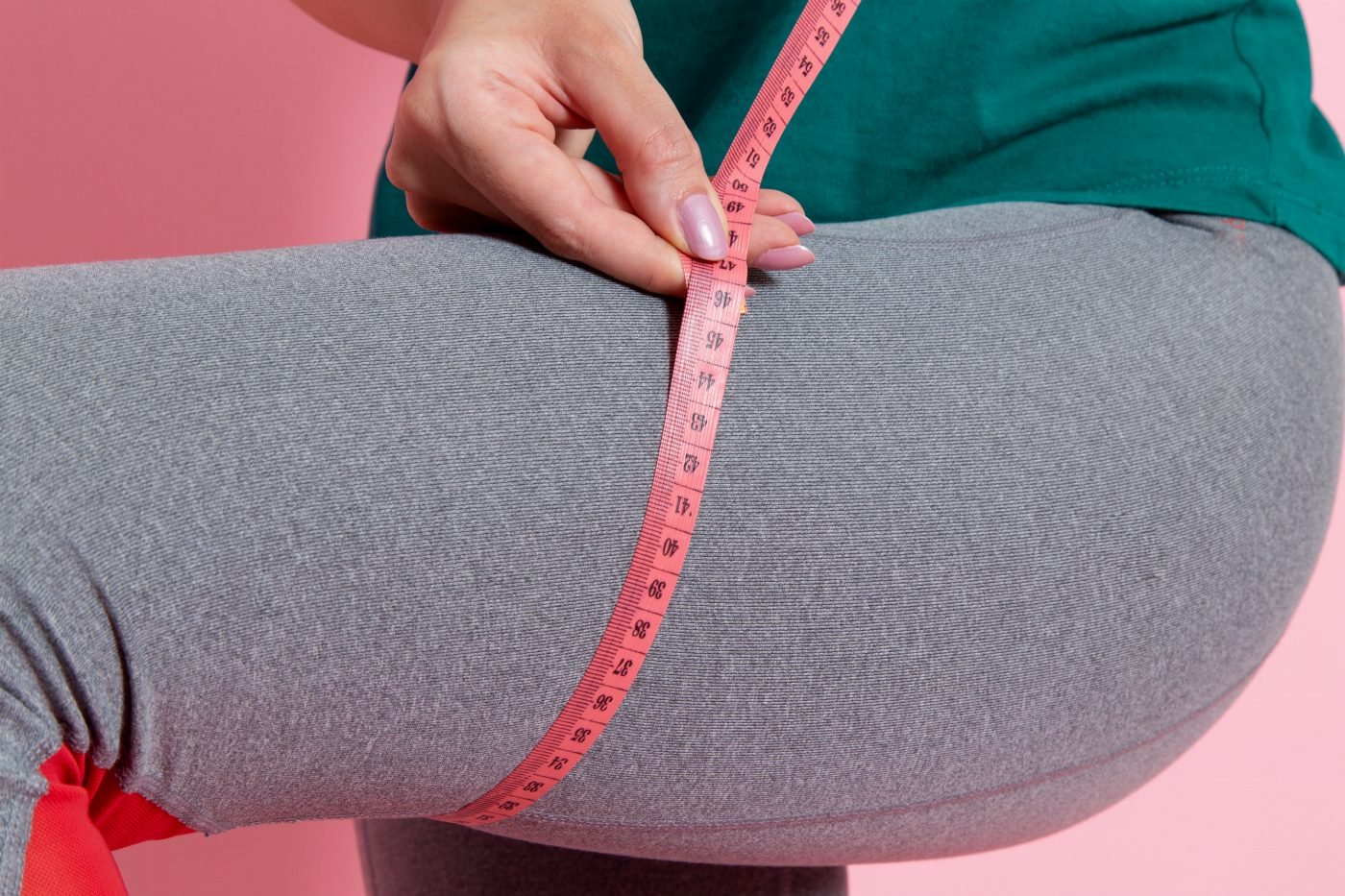
Lipedema tissue does not shrink on a diet the way ordinary fat does, so the number on the scale is a poor measure of whether anything is improving. Meanwhile a tape measure around the calf, a pain score, and how many hours you managed the compression garment tell you something real. LipeWin is built around those instead.
LipeWin is a private log you keep for yourself, designed around what actually moves in lipedema. It is free, it works on a phone, and it is written in Arabic first.
Ankle, calf, knee and thigh, left and right, tracked separately. With lipedema the tape measure outranks the scale, so it is a first-class field, not a note.
A quick score for pain, heaviness, swelling and bruising. Patterns you cannot see day to day become obvious across a month.
A food log that already knows ful, taameya, koshari, molokhia and mahshi — not a Western database that thinks you eat oatmeal.
Hours worn, and how old each garment is. Compression loses its grip long before it looks worn out; the app tells you when to replace it.
Log sessions — with a therapist, or the self-massage you do at home — and see them next to your symptom scores.
The routine pre-period fluid swing can be more than a kilo overnight. The app knows where you are in your cycle, so it never reads that as a failure.
An account, a name to be called by, and nothing else. No card, no clinic referral.
A weight, a measurement, how the legs felt today. A partial log is still a log — the app is built to be forgiving.
Once there is a few weeks of data, the trends page shows what is actually changing — and what is just the week of the month.
Plain-language articles, in Arabic and English, on the parts of this that nobody explains properly.
The lymphatic system has no pump of its own; it borrows yours. That one fact explains why walking, and moving in water especially, does more for lipedema than its gentleness suggests.
The hardest part is often not the treatment but being believed. Which specialist to ask for, how to arrive prepared, and what to do when you are told to just lose weight.
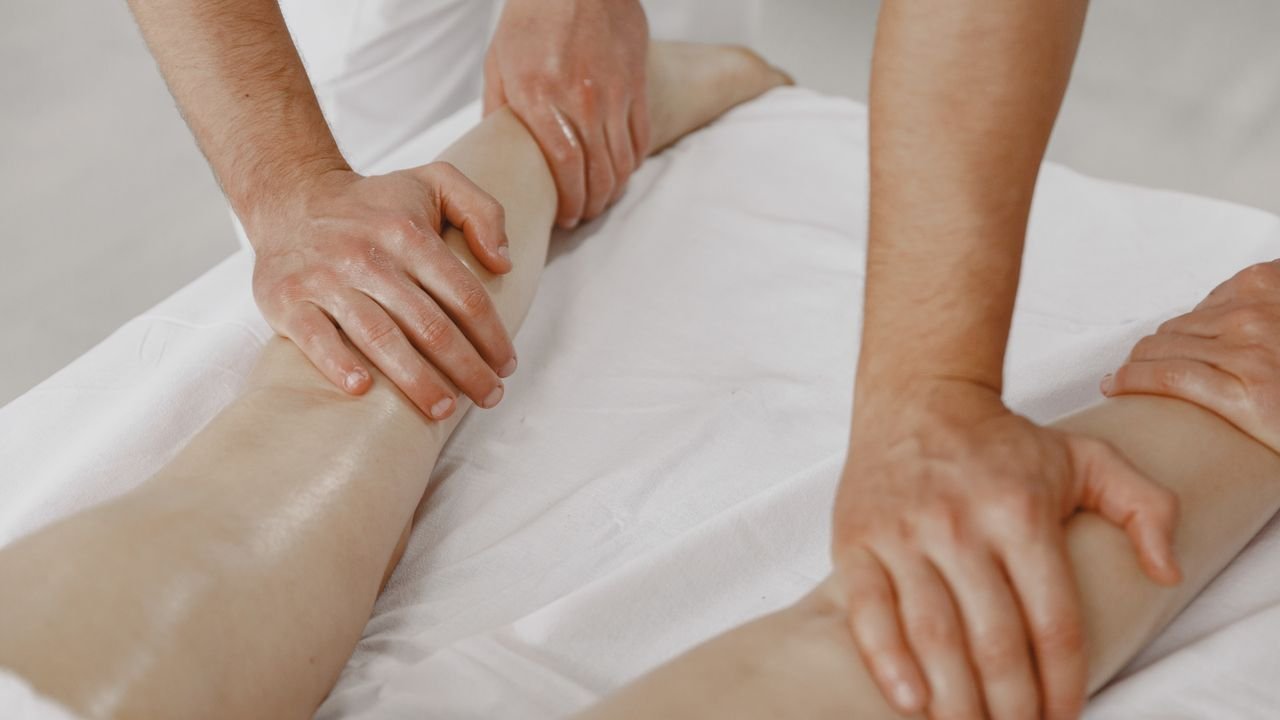
It is gentle, it is specific, and it is nothing like the deep tissue massage people picture. What MLD does for lipedema, and how to do a little of it safely at home.
No. They are different conditions and they can occur together. Lipedema fat is symmetrical, painful to pressure, largely spares the hands and feet, and does not respond proportionally to weight loss. A person can have lipedema at any body size, including a slim one.
Weight loss can reduce any ordinary fat you are carrying on top of the lipedema, which usually helps mobility and pain. But it does not remove the lipedema tissue itself, and expecting it to is the reason so many women conclude they must not have tried hard enough. They tried hard enough.
No — you can track how your body behaves whether or not anyone has named it yet. In practice a few months of measurements and symptom scores make the conversation with a doctor much shorter, because you arrive with a record instead of a description.
Your log is yours. It is not sold, not shared with advertisers, and not shown to anyone else. The privacy policy says exactly what is stored and why.
No. The tracking app is free to use.
You do not need a diagnosis, a plan, or a good week. You need somewhere to put the information so that in three months you can see what actually changed.
Create a free account