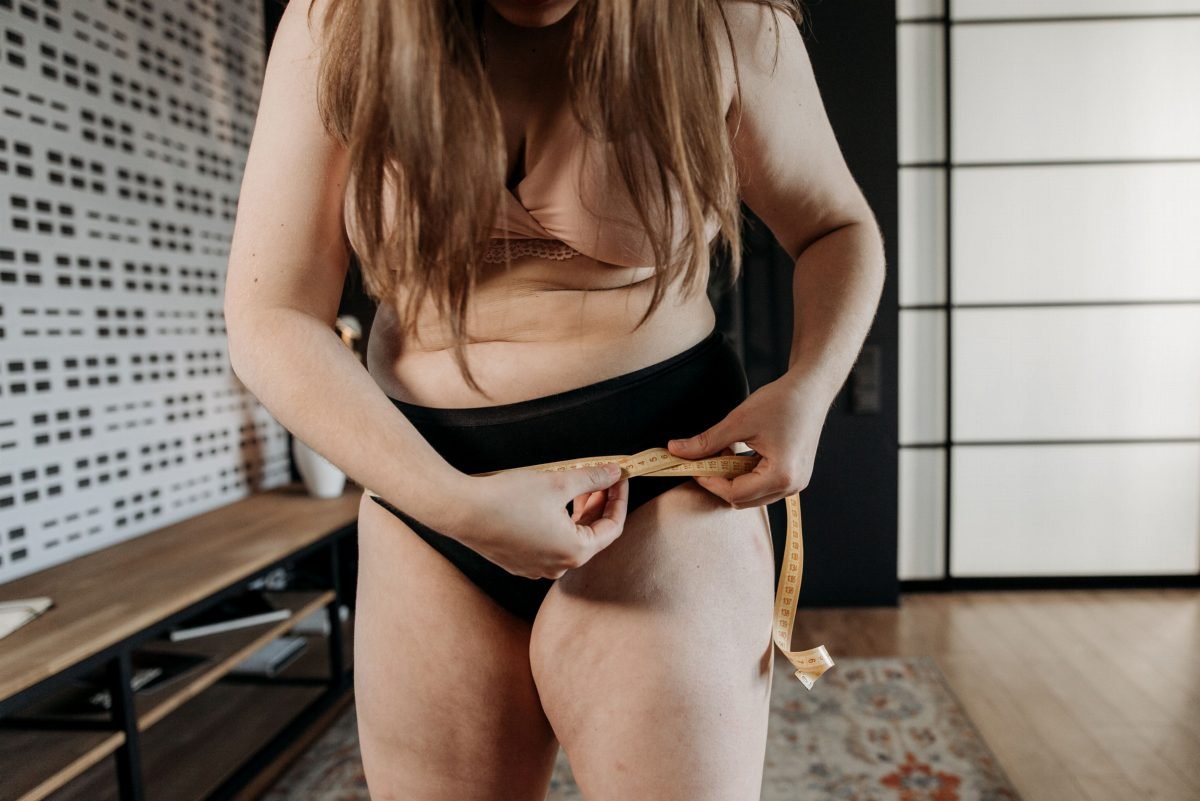
What is lipedema? A plain-language explanation
A chronic disorder of fat tissue that affects women almost exclusively — symmetrical, painful to the touch, and stubbornly unmoved by dieting. Here is what is actually happening.
If you have been told for years to eat less and move more, and your legs have not changed while the rest of you has, there is a reasonable chance nobody has said the word lipedema to you. It is not a rare condition. It is a rarely named one.
The short version
Lipedema — also spelled lipoedema, and known clinically in Arabic as الوذمة الشحمية — is a chronic, progressive disorder of adipose (fat) tissue. Fat accumulates abnormally and symmetrically, almost always on the legs, hips and buttocks, and in around a third of cases on the arms as well. It affects women almost exclusively.
The distinguishing feature is not the amount of fat. It is how the tissue behaves. Lipedema fat is painful, it holds fluid, it bruises easily, and it does not shrink proportionally when you lose weight. That last point is the one that costs women decades.
The pattern, in six lines
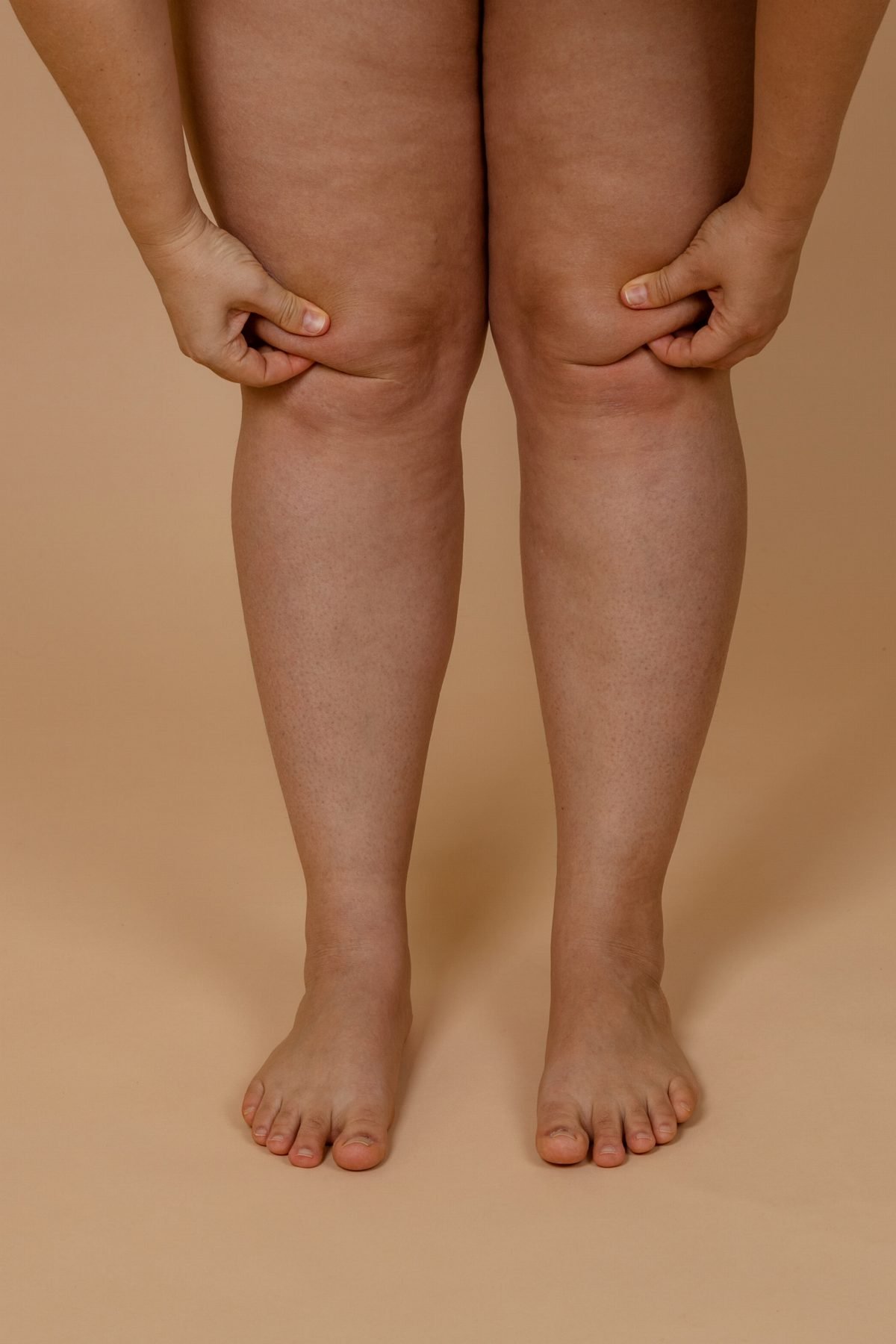
- Symmetrical. Both legs, to roughly the same degree. One swollen leg is a different problem and needs a doctor promptly.
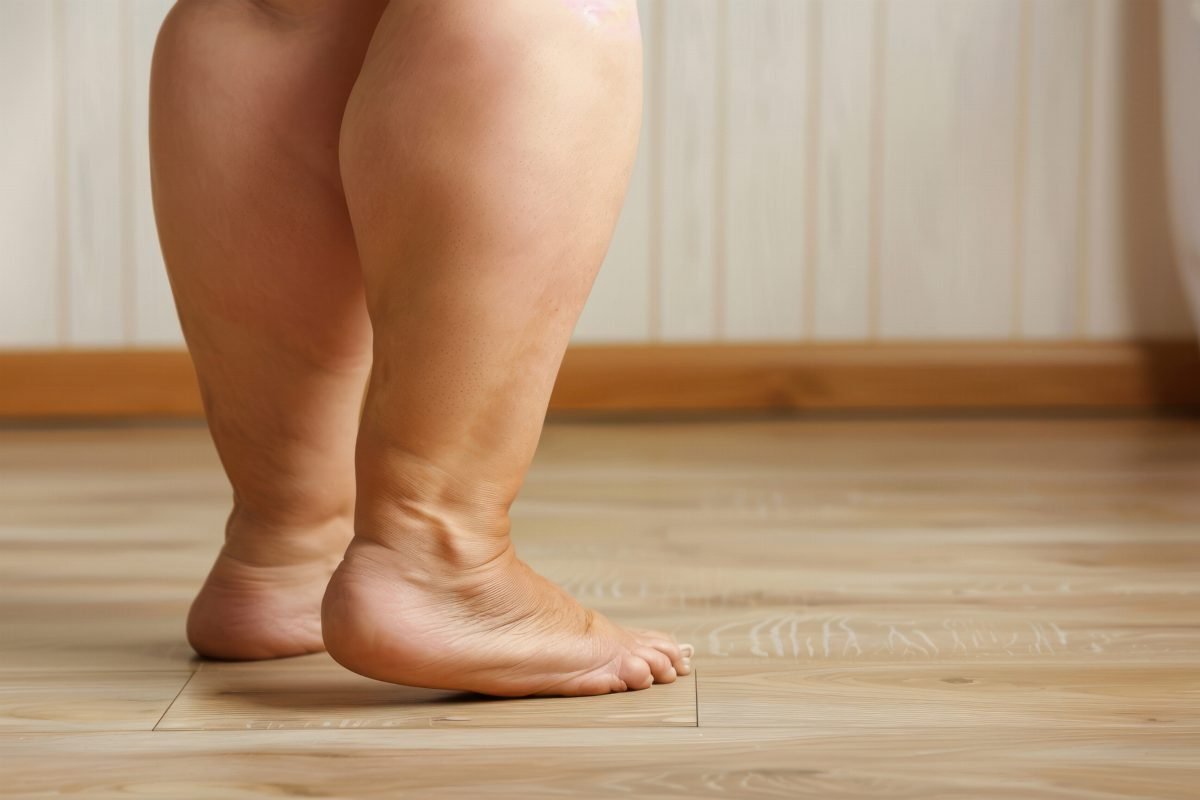
- Stops at the ankle. There is often a visible cuff or bracelet where the affected tissue ends and the foot begins. Feet and hands stay comparatively small.
- Painful. Pressure hurts. Legs ache after standing. A firm massage can be genuinely unpleasant rather than just intense.
- Bruises easily. Marks appear with no impact you can remember.
- Disproportionate. The upper body and the lower body look like they belong to two different dress sizes.
- Diet-resistant in the legs specifically. Weight comes off the face, chest and waist. The legs stay.
Why it starts
Honestly: nobody knows the mechanism yet. What is well established is when it starts. Lipedema overwhelmingly begins or worsens at a point of hormonal change — puberty, pregnancy, or the years around menopause. It also runs in families; most women with lipedema can name a mother, aunt, grandmother or sister with the same body shape.
Those two facts together point at a hormonal trigger acting on an inherited susceptibility, and that is roughly where the research currently stands. It is not caused by overeating. It is not caused by inactivity. Thin, athletic women get lipedema, which is a fact worth holding on to the next time somebody offers you dietary advice you did not ask for.
Stages and types
You will see clinicians refer to stages and types. They describe different things and it is easy to conflate them.
Stages describe the skin surface and the tissue underneath, and roughly track progression:
- Stage 1 — skin still smooth; small nodules can be felt in the tissue beneath.
- Stage 2 — the surface becomes uneven, with dimpling and larger nodules.
- Stage 3 — large overhanging lobes of tissue, most often at the thighs and knees, which can start to affect how you walk.
Types describe where the tissue sits — hips and buttocks only, down to the knee, down to the ankle, arms, and combinations of those. Types do not progress into one another the way stages do; they are a map, not a timeline.
Neither number tells you how much pain you are in, and pain does not track neatly with stage. A woman at stage 1 can hurt more than a woman at stage 3.
What it is not
It is not obesity. The two can occur in the same person and are constantly confused, but they are different conditions with different tissue behaviour. There is a whole article on this distinction because it is the one that most often gets a woman dismissed.
It is not lymphoedema — though it can eventually cause it. In lymphoedema the swelling usually involves the foot, often affects one side more than the other, and pressing a thumb into it tends to leave a dent (pitting). Classic lipedema spares the foot and does not pit in the early stages. Long-standing untreated lipedema can overload the lymphatic system and produce a combined picture, sometimes called lipo-lymphoedema.
It is not simple water retention, and it is not a cosmetic complaint.
See a doctor promptly, not eventually, if: one leg suddenly swells; a limb becomes hot, red and painful; you develop chest pain or shortness of breath; or skin over the area breaks down or weeps. Those are signs of other conditions, some of them urgent, and none of them wait for a blog article.
How it is diagnosed
Clinically — by a doctor who takes a history and examines you. There is no blood test for lipedema and no scan that confirms it. Imaging is sometimes used to rule other things out, not to rule lipedema in.
That has one practical consequence: the quality of your diagnosis depends almost entirely on whether the clinician in front of you has heard of the condition. Many have not. This is not a reflection on you, and it is worth seeking a second opinion rather than concluding you were imagining it.
What actually helps
There is no cure yet. There is a great deal that reduces pain, slows progression and improves how you move:
- Compression garments, properly measured and correctly specified. This is the single most consistently recommended conservative measure.
- Manual lymphatic drainage and, in more advanced cases, complete decongestive therapy delivered by a trained therapist.
- Movement, especially in water. Water provides compression and takes the load off painful joints at the same time.
- An anti-inflammatory way of eating. The evidence here is genuinely early — small studies, promising signals, no certainty. It is worth trying and not worth being sold.
- Surgery — specialised lymph-sparing liposuction, performed by a surgeon who treats lipedema specifically. It is not standard cosmetic liposuction and should not be bought from a clinic that treats it as though it were.
The part that is not medical
Most women with lipedema arrive at the diagnosis after years of being told their body is a discipline problem. That does real damage, and being handed a name for it does not undo the damage automatically. If the years of blame left something behind — and they usually do — that is worth treating too, and it is not a lesser problem than the legs.
You did not do this to yourself.
Start where you are
You do not need a diagnosis, a plan, or a good week. You need somewhere to put the information so that in three months you can see what actually changed.
Create a free account