Lipedema or obesity? Why the difference matters so much
They can look alike from the outside and they behave nothing alike underneath. This is the confusion that gets women dismissed, and these are the differences that separate them.
The most consequential sentence in a lipedema story is usually said by a professional, in under ten seconds, and it is some version of: you just need to lose weight.
Sometimes that is even partly true — the two conditions frequently coexist. But treating lipedema as though it were only obesity produces a prescription that cannot work, and then blames the patient when it does not.
The differences, side by side
| Lipedema | Ordinary excess fat | |
|---|---|---|
| Distribution | Symmetrical, both limbs equally; legs, hips, often arms | Follows the individual's own pattern; commonly the abdomen |
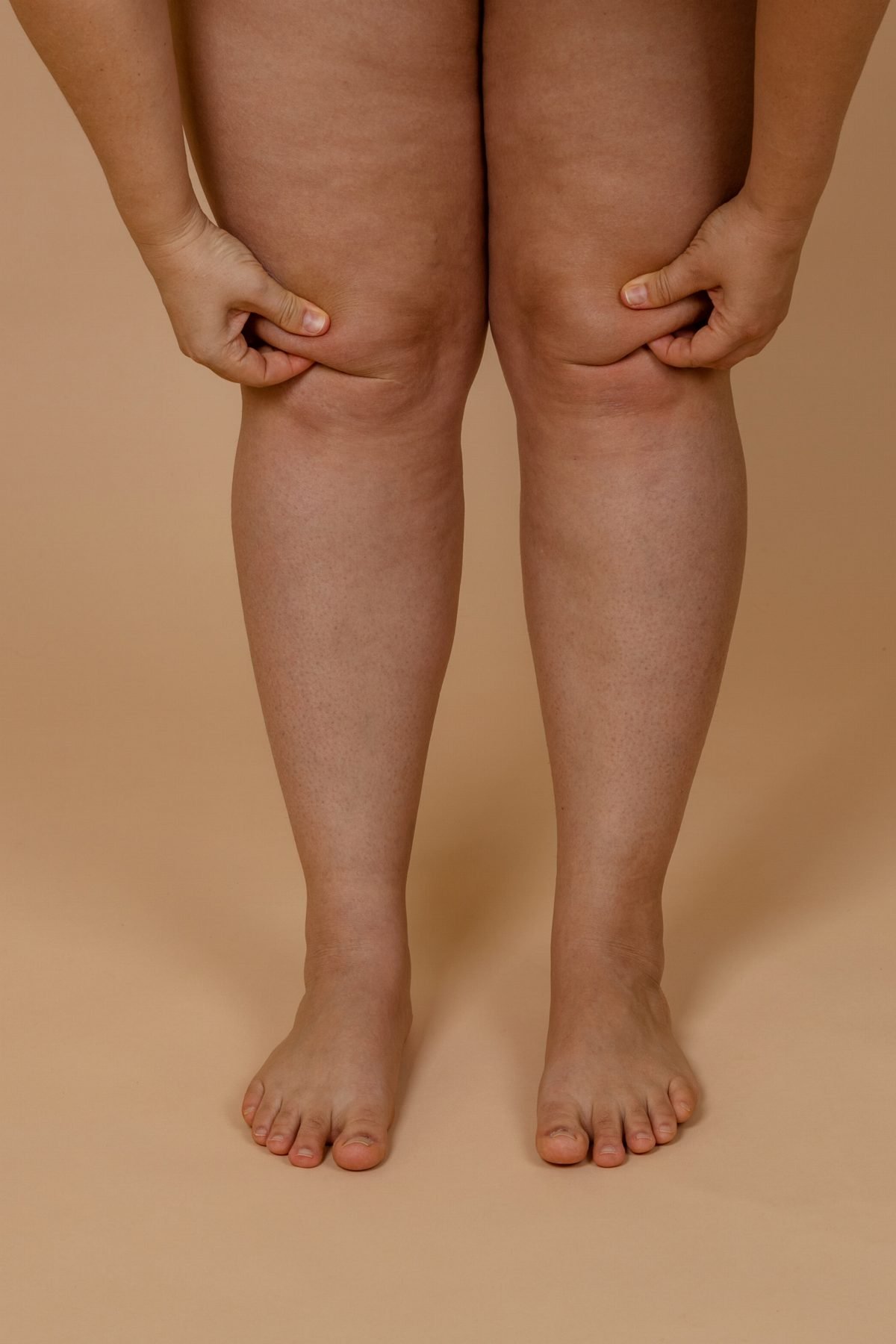
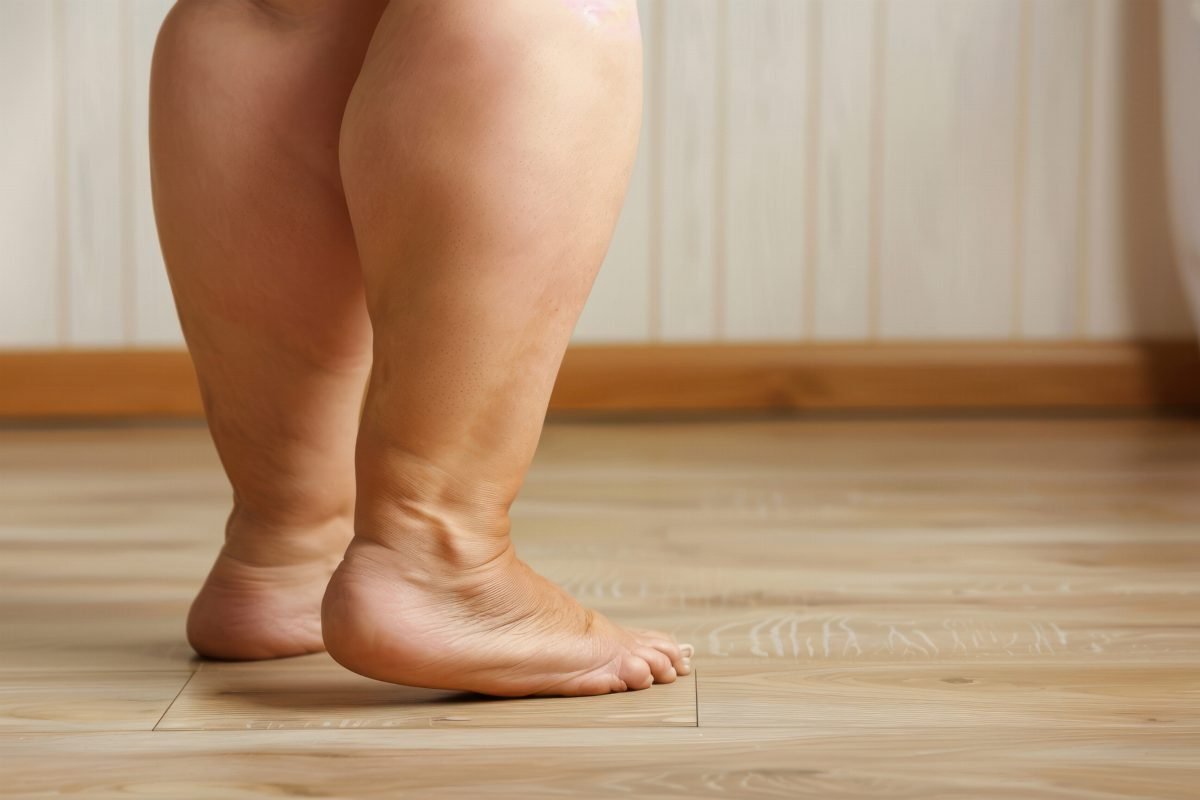
| Hands and feet | Spared — a visible cuff at the ankle or wrist | Involved along with everything else |
| Pain on pressure | Yes, characteristically | No |
| Bruising | Easy, often unexplained | Normal |
| Response to a calorie deficit | Poor in affected areas, normal elsewhere | Proportional across the body |
| Texture | Nodular — small firm lumps felt under the skin | Uniform |
| Who it affects | Almost exclusively women; onset at hormonal milestones | Anyone |
| Family history | Very common | Variable |
The test that keeps being run on you
There is an informal experiment most women with lipedema have already performed, several times, without meaning to. You diet successfully. You lose ten kilos. Your face changes, your bra size changes, your waistband changes — and your calves measure the same.
That result is diagnostic information. It is not evidence that you cheated. Ordinary fat responds proportionally to an energy deficit; lipedema tissue largely does not. When a treatment works everywhere except the affected area, the honest conclusion is that the affected area has something else going on in it.
This is why the site's tracking app records limb circumferences separately from weight. A single number on a scale mixes together the tissue that responds and the tissue that does not, and then hands you the average as though it were a verdict.
Why BMI is close to useless here
BMI is a ratio of weight to height. It cannot tell where the weight is, what kind of tissue it is, or whether that tissue hurts. In lipedema the mass sits in the lower body, which pushes BMI up while the metabolic picture is often better than the number implies.
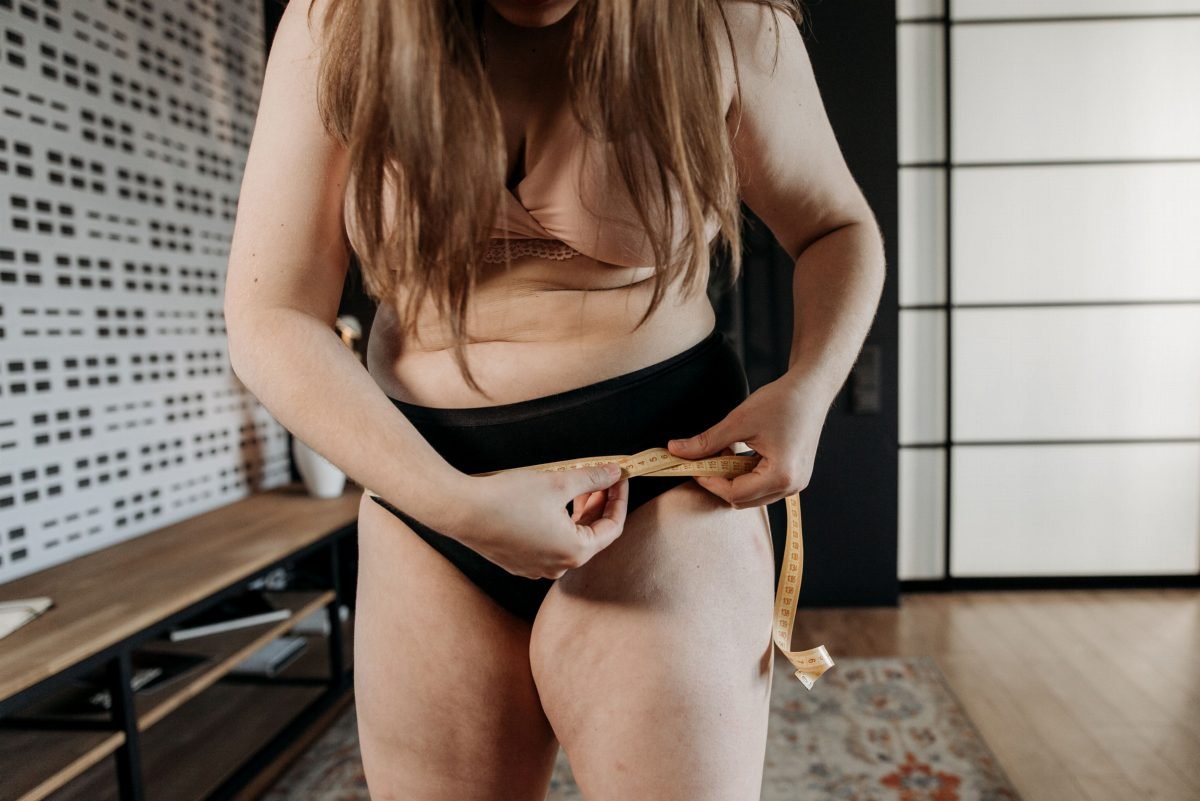
Some clinicians use a waist-to-hip ratio alongside BMI for exactly this reason: in lipedema the waist is often relatively narrow against very much larger hips, and that disproportion is itself a signal. A woman can meet the BMI definition of obesity, have a normal waist measurement, normal blood pressure, normal fasting glucose — and be sent away with dietary advice because a single number was consulted and her legs were not examined.
They very often coexist
This is where the honest version is more complicated than the reassuring one. Having lipedema does not prevent you from also carrying ordinary excess fat, and many women have both. That matters because:
- Ordinary fat does respond to a calorie deficit, and losing it usually reduces pain and improves mobility, because there is less load on painful legs.
- Additional weight appears to increase strain on the lymphatic system, and long-term lymphatic overload is one route by which lipedema progresses.
- Weight loss will not remove the lipedema tissue. Expecting it to is what makes an otherwise successful outcome feel like a failure.
So the useful framing is not "weight loss is pointless". It is: weight loss addresses one of the two things, and you should be told in advance which one, so that when your legs do not change you know why — and do not conclude, again, that the problem is you.
What to say in the appointment
If you have five minutes and a doctor who has not mentioned lipedema, these are the sentences that most reliably shift the conversation:
- "The fat on my legs is painful to press, not just heavy."
- "It is symmetrical and it stops at my ankles — my feet are small."
- "I bruise without injuring myself."
- "I have lost weight before. It came off everywhere except my legs."
- "My mother and my sister have the same legs."
- "Could this be lipedema?" — ask by name.
Naming the condition is not overstepping. It is giving a busy clinician a hypothesis to test, and it is often the difference between a referral and a leaflet about portion sizes.
What to take away
- Lipedema and obesity are different conditions that frequently occur together.
- Symmetry, pain on pressure, the ankle cuff and easy bruising are the features that separate them.
- Weight loss helps the ordinary fat and the joint load. It does not remove lipedema tissue.
- BMI alone will mislead you and your doctor. Measurements of the actual limbs will not.
Start where you are
You do not need a diagnosis, a plan, or a good week. You need somewhere to put the information so that in three months you can see what actually changed.
Create a free account