Why the scale lies to you — and what to measure instead
One number, four different things inside it, measured at the worst possible resolution. Here is what a bathroom scale can and cannot tell a woman with lipedema.
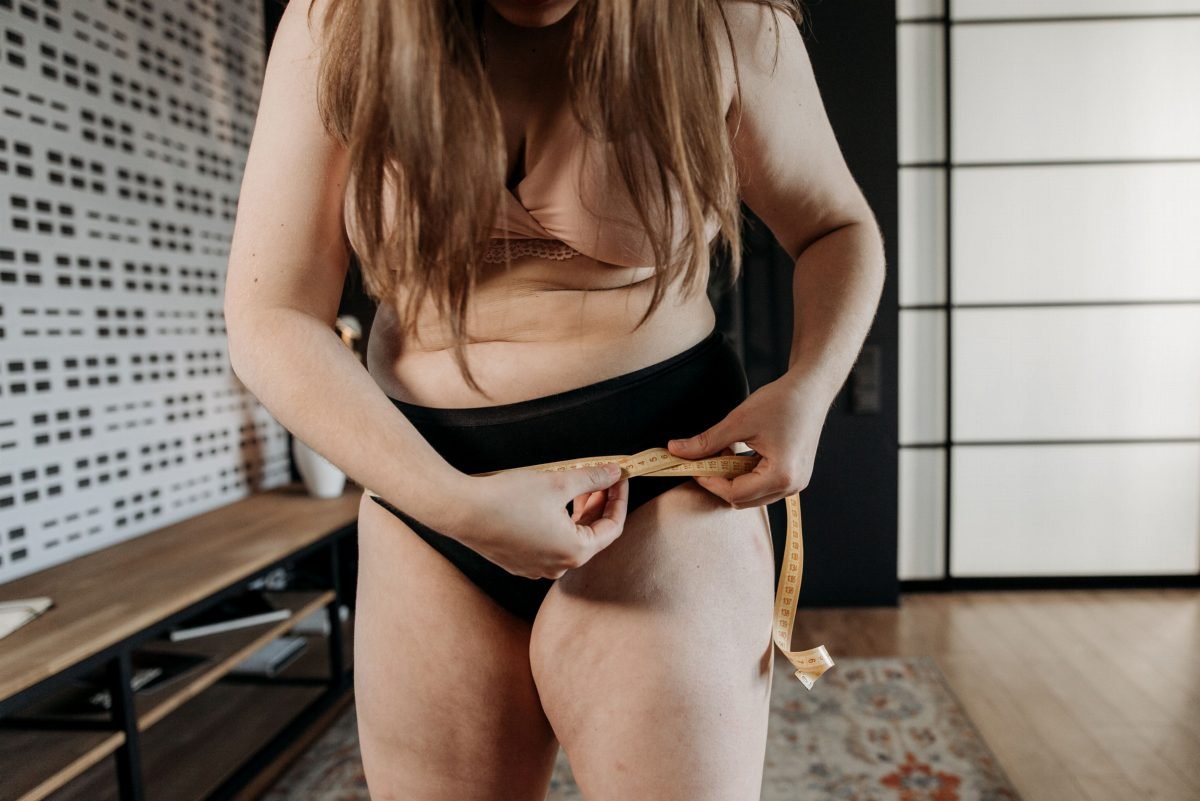
Photo: Pavel Danilyuk / Pexels
A bathroom scale reports one number. Inside that number, at least four different things are moving independently:
- Fluid. Can swing two kilos in a day, and swings more in a body whose lymphatic drainage is already working hard.
- Your cycle. The pre-menstrual fluid shift alone is routinely more than a kilo, overnight, and has nothing to do with what you ate.
- Ordinary fat. The part that does respond to how you eat.
- Lipedema tissue. The part that largely does not.
The scale adds those four together and gives you one figure, with no way to tell which one moved. Then, if the figure is higher than yesterday, most people read it as a verdict on their character.
The specific problem with lipedema
For most people, weight is at least a rough proxy for the thing they care about. For lipedema it is worse than rough, because the tissue you most want to change is the tissue least likely to move — so the measure is systematically biased against showing you progress.
You can spend three months doing everything that is actually recommended — wearing compression daily, moving in water twice a week, eating in a way that settles the inflammation — feel meaningfully better, have calves that measure two centimetres smaller, and see the scale unchanged. If the scale is your only instrument, you conclude that nothing worked, and you stop.
That is the failure mode. Not the diet. The measuring instrument.
Measure these instead
- Limb circumferences, left and right separately. Ankle, calf, knee, thigh. This is the primary measure. Lipedema is frequently a little asymmetric, and an average across both legs hides that.
- Pain, on a simple 0–10 scale, daily. The single most important outcome, and the one nobody records.
- Heaviness and swelling, likewise daily and likewise crude. Crude and consistent beats precise and abandoned.
- Compression hours. How many hours you actually managed, not how many you intended.
- How your clothes and shoes fit at a fixed point — the same trousers, the same time of day.
- Weight — weekly, and as one line among several. Not the headline.
How to measure a limb so the number means something
A tape measure is only useful if the next measurement is taken the same way. Six rules:
- Same time of day. Morning, before the day's fluid has settled downward. Evening measurements are consistently larger.
- Same landmark. Measure a fixed distance from a bony point — for example 10 cm above the top of the kneecap — not "the widest part", which moves.
- Snug, not tight. The tape should touch the skin all the way round without indenting it.
- Both sides, every time. Write left and right separately.
- Before compression goes on, never after.
- Weekly is enough. Daily limb measurement produces noise and anxiety in equal amounts.
Note your cycle day alongside the numbers. Without it, the routine pre-period swing looks exactly like a bad fortnight, and you will spend that fortnight blaming yourself for water.
What a real trend looks like
Real change in lipedema is slow and it is visible only across weeks. A useful habit is to refuse to interpret any single reading at all — not the good ones either — and to look only at a month at a time. Ask three questions:
- Is the average pain score for this month lower than last month's?
- Are the limb measurements trending down, flat, or up — over four points, not two?
- Did I wear the compression more hours this month than last?
Those three answers tell you whether what you are doing is working. The number on the scale this morning tells you almost nothing, and it is very good at making you feel it told you everything.
If you would rather not weigh at all
That is a legitimate choice and, for some women, the right one. If weighing sends you into a bad few days, the measurements and the symptom scores carry the information you need on their own. Weight is worth having if a clinician asks for it, and worth having a record of if you are being considered for surgery — but it is not the measure that tells you whether your treatment is working, and it does not have to be part of your week.
Start where you are
You do not need a diagnosis, a plan, or a good week. You need somewhere to put the information so that in three months you can see what actually changed.
Create a free account