Getting a lipedema diagnosis: what the appointment is actually like
Lipedema is diagnosed by history and examination, which means the quality of the diagnosis depends heavily on what you bring into the room. Here is how to make that count.

Photo: cottonbro studio / Pexels
In this article
There is no blood test for lipedema and no scan that confirms it. It is a clinical diagnosis: a doctor takes a history, looks, and puts their hands on the tissue. Imaging is sometimes used to rule other things out — never to rule lipedema in.
That has one very practical consequence. The quality of your diagnosis depends enormously on how well the history is taken, and you can influence that substantially by what you walk in with. More on why there is no test.
Who to see
The specialties most likely to recognise it: vascular medicine or phlebology, lymphology, dermatology in some systems, and plastic surgeons who treat lipedema specifically. A general practitioner or endocrinologist may well not have encountered it, which is not a reflection on them or on you. Finding someone in Egypt and the Gulf.
When you book, say the word. "I would like an assessment for lipedema" filters better than "I have a problem with my legs", and the response you get to that sentence is itself information about whether you are in the right place.
What to bring
The folder
- Photographs. Standing, both legs, front and side, feet included, daylight, plain background. The ankle-to-foot contrast is the picture that does the most work. If you have older photos showing the change over years, bring those too.
- Measurements. Ankle, mid-calf, above the knee, mid-thigh, both legs, over a few months if you have them, taken at the same time of day.
- A pain record. A daily score out of ten for a few weeks, with notes. This converts your most important symptom into something a clinician can act on.
- A timeline. When it started, what was happening then (puberty, a pregnancy, menopause), the points at which it jumped.
- Family history. Who else has the same shape.
- Weight history. Specifically: what happened to your legs when you lost weight elsewhere. This is one of the most diagnostically loaded things you can say.
- Medication list, including contraception and any hormones.
- What you have already tried and what it did — diets, compression, drainage, aesthetic treatments.
Print it, one page. A page handed across a desk gets read; a story told across ten minutes gets interrupted.
The words that carry weight
You are not performing for a doctor — but the vocabulary genuinely changes how the information is received. Compare:
| Instead of | Say |
|---|---|
| "My legs are huge" | "There is a marked disproportion between my upper and lower body — I wear two sizes." |
| "They hurt" | "The tissue is painful on pressure. A firm thumb into my thigh is genuinely unpleasant." |
| "I bruise a lot" | "I bruise easily on the thighs and upper arms with no remembered impact." |
| "I can't lose weight" | "I lost 12 kg. My waist and face changed. My leg measurements did not move." |
| "It's swollen" | "It stops above the ankle — there is a cuff, and my feet are normal. It does not pit." |
| "It runs in the family" | "My mother and her two sisters have the same distribution." |
What the examination involves
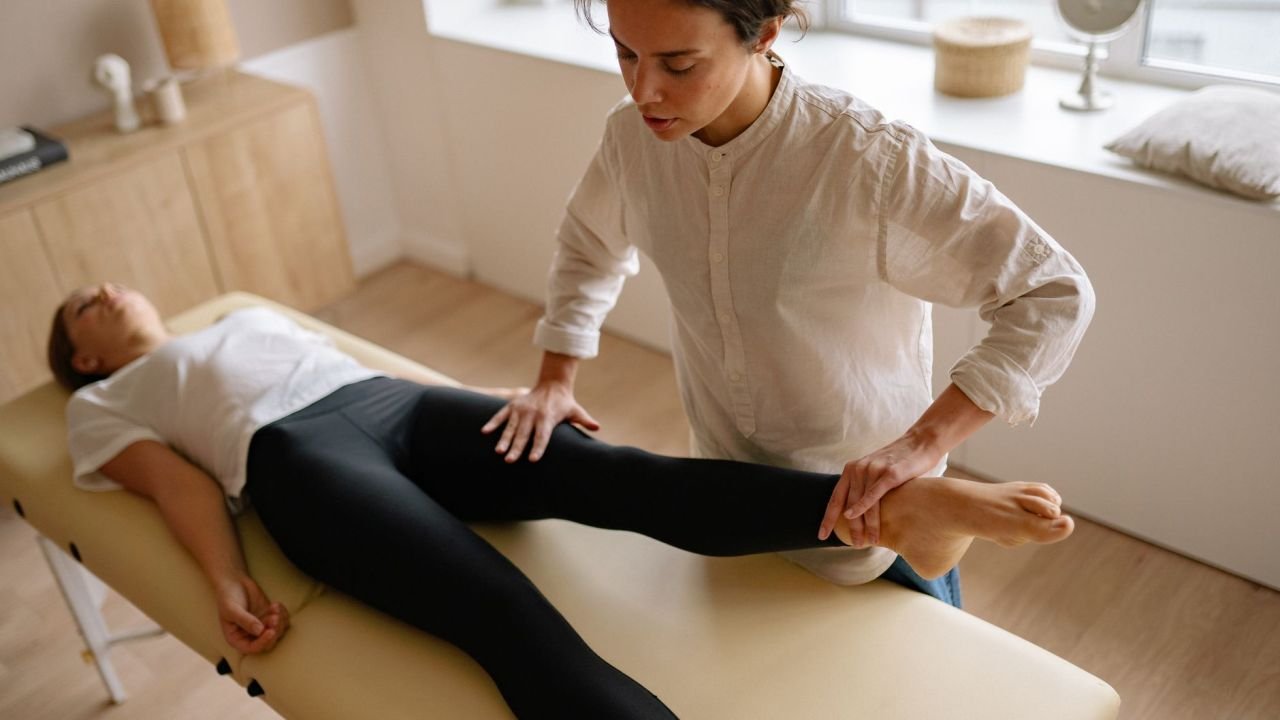
- Looking at distribution, symmetry, proportion, and whether the foot is spared.
- Palpating the tissue for nodularity and tenderness. Expect this to be uncomfortable; say so if it is.
- The pinch test on the tissue.
- Stemmer's sign — trying to lift the skin on the second toe. Negative points away from lymphoedema.
- Pitting test — thumb pressed in for around 15 seconds to see whether a dent remains.
- Sometimes measurements, and sometimes photographs for the record.
Wear something that comes off easily, and expect to be examined standing as well as lying down.
What tests may be ordered, and what they are for
Not to confirm lipedema — to exclude other things. Reasonable ones include thyroid function, kidney function, a full blood count, and sometimes venous duplex ultrasound if there is any suspicion of venous disease or a clot. Lymphoscintigraphy is occasionally used where the lymphatic picture is unclear.
If someone offers you a genetic test for lipedema, that is a warning sign — no such test exists. What is and is not known about the genetics.
Questions worth asking before you leave
- What stage and type do you think this is?
- What compression class and knit do you recommend, and who fits it?
- Is there any lymphatic involvement?
- Can you refer me for manual lymphatic drainage?
- What should I be watching for that would mean coming back sooner?
- Can I have this diagnosis in writing?
That last one matters more than it sounds. A written diagnosis is what a garment supplier, an insurer and a surgeon all need later, and getting it at the time is far easier than requesting it in a year.
If the appointment goes badly — and it does, often — that is a reason to see somebody else, not a reason to doubt what you have observed about your own body over years. What to do when you are dismissed has the specific scripts.
After the diagnosis
Two things tend to happen at once, and it helps to expect both. Relief, because there is a name and it was never a discipline problem. And something heavier underneath it — grief for the years, and anger at the advice. Both are extremely common and neither is an overreaction. That reaction is documented, not unusual.
Practically, the next steps are: get measured for compression, start moving in it, and decide what you are going to track. Everything on the treatment menu.
Questions people ask about this
How is lipedema diagnosed?
Clinically — by a doctor taking a history and examining the tissue. There is no blood test and no scan that confirms it; imaging is used only to exclude other conditions. The examination looks at distribution, symmetry and whether the foot is spared, palpates for nodularity and tenderness, and includes Stemmer's sign and a pitting test. Because the diagnosis rests on the history, what you bring to the appointment materially changes its quality.
What should I take to a lipedema appointment?
One printed page: photographs standing with both legs and feet in frame, limb measurements at fixed points over a few months, a daily pain score, a timeline of when it started and jumped, family history, your medication list, and — most diagnostically useful of all — what happened to your legs the last time you lost weight elsewhere. A page handed across a desk gets read; a story told across ten minutes gets interrupted.
Which doctor should I see for lipedema?
Vascular medicine or phlebology, lymphology, dermatology in some systems, or a plastic surgeon who treats lipedema specifically. A GP or endocrinologist may not have encountered it, which is not a reflection on them or on you. When booking, say "I would like an assessment for lipedema" rather than "I have a problem with my legs" — the response to that sentence is itself information about whether you are in the right place.
Start where you are
You do not need a diagnosis, a plan, or a good week. You need somewhere to put the information so that in three months you can see what actually changed.
Create a free account