Lymphatic self-massage at home, step by step
Professional drainage is not available weekly to most women in this region. A self-administered version is, and done correctly it is a genuine part of managing the pain.
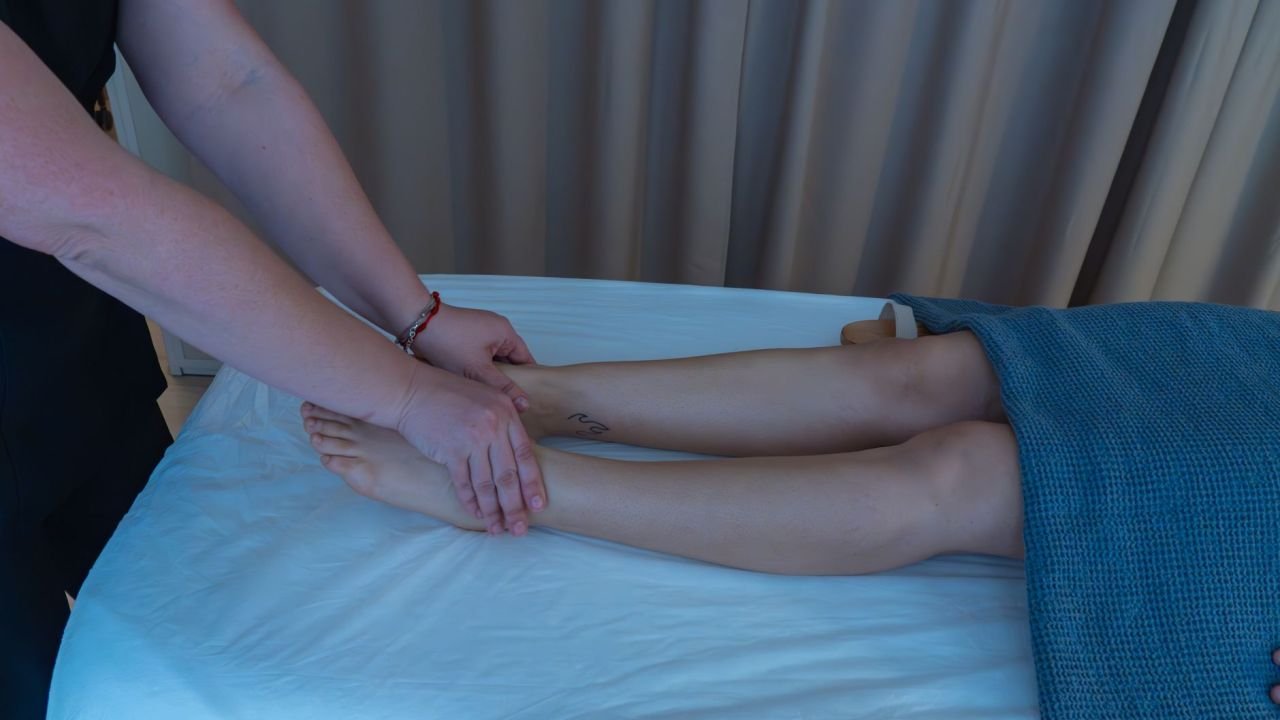
Photo: Emilio Sánchez Hernández / Pexels
In this article
Before the sequence, the two things that make the difference between this being useful and being a waste of twenty minutes.
It is a pain treatment, not a slimming treatment. The German S2k guideline is explicit: the objective of manual lymphatic drainage in lipedema is not volume reduction but modulation of the group C nerve fibres. If you do this expecting smaller legs, you will conclude it does not work. If you do it expecting less pain and less heaviness, you are measuring the thing it actually does.
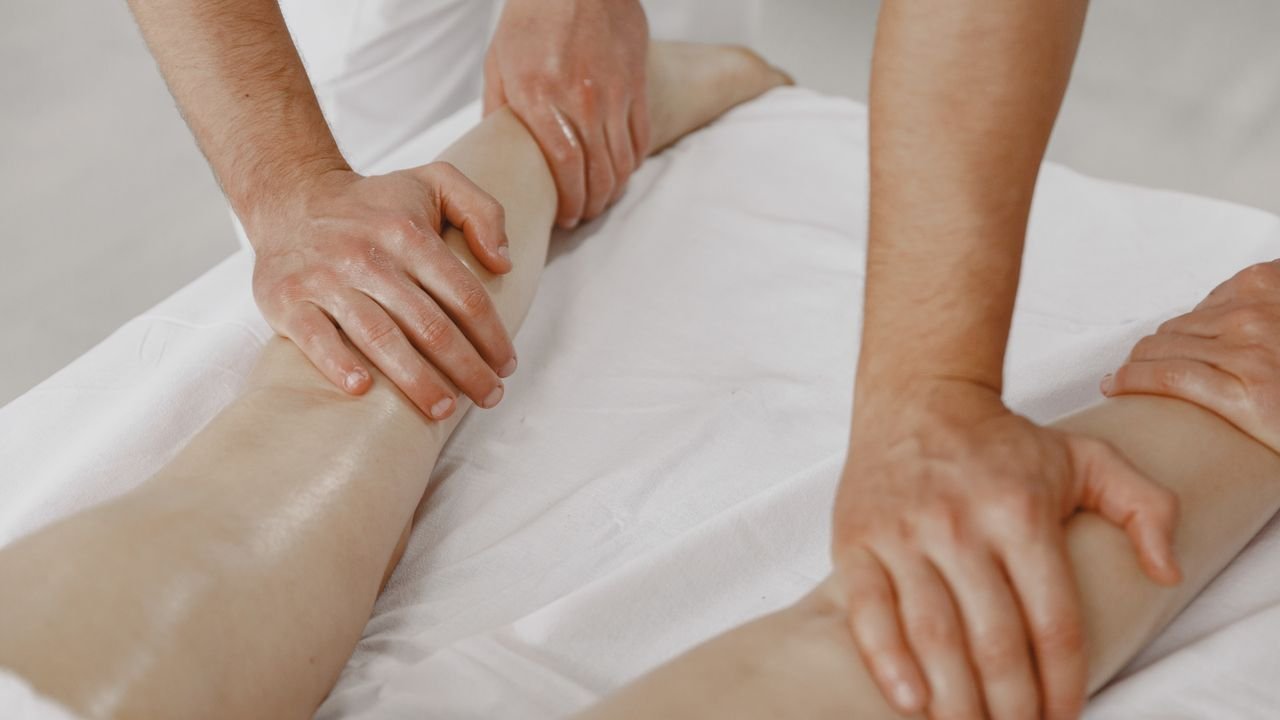
It is far lighter than you think. The most common mistake by an enormous margin is pressing too hard. Lymphatic vessels sit just under the skin; the correct pressure stretches the skin without compressing what is beneath it. The standard instruction is that you should not be able to feel muscle underneath your hands. If your skin goes red, you are pressing too hard.
The technique itself
Five rules
- Flat hands. The whole palm and the flats of the fingers. Never fingertips, never knuckles, never a tool.
- Stretch and release. You are stretching the skin in the direction of drainage and then letting it spring back. It is not a rubbing or gliding motion.
- Slow. Roughly one second per stroke. Lymph moves slowly; there is no hurrying it.
- 10 to 15 repetitions per area before moving on.
- No oil or cream. You need to move the skin, not slide over it.
The order, and why it is counter-intuitive
You clear the drain before you empty the sink. That means you always start centrally — at the neck, then the nodes at the top of the limb — and only then work on the limb itself, moving from the top of it downward, so that each section you clear has somewhere to empty into.
Starting at your ankle and pushing upward into a congested system is the single most common sequencing error, and it is why some people find self-drainage does nothing.
The sequence for the legs
- Breathe first. Five minutes. Lying down, one hand on your abdomen. In through the nose so the hand rises, out slowly through the mouth. The pressure change in the chest is what draws lymph through the thoracic duct — this step is not a relaxation preamble, it is part of the treatment.
- Neck, both sides. Flat fingers just above the collarbone. Gentle downward-and-inward stretch and release. 10–15 times. This is the terminus where all lymph re-enters the bloodstream, and clearing it first is what makes everything below it work.
- Groin nodes. Flat hand in the crease at the top of the thigh, on the front. Gentle pressure inward and upward, stretch and release, 10–15 times each side.
- Upper thigh. Flat hands, stretching the skin upward toward the groin. Work all around — front, outer, inner, back — 10–15 strokes per surface.
- Lower thigh, above the knee. Same, directing upward.
- Behind the knee. There is a node group here. Flat fingers, gentle upward stretch, 10–15 times.
- Calf. Working upward toward the back of the knee. All surfaces.
- Ankle and foot, upward toward the calf.
- Finish with the breathing again. Two minutes.
Fifteen to twenty-five minutes for both legs. Daily is ideal; three or four times a week is realistic and still worth doing.
A note on where you send it. You will find self-drainage instructions online — often excellent ones — that route fluid away from the groin and toward the underarm. Those are written for people whose groin or pelvic lymph nodes were removed during cancer surgery, and the detour exists because the normal route is gone. If your inguinal nodes are intact, which they are in uncomplicated lipedema, use the standard route above: neck, then groin, then down the limb. Following the cancer-surgery route unnecessarily sends fluid the long way round.
For the arms
Same principles, different destination — arm lymph drains to the nodes in the underarm rather than the groin.
- Breathing, five minutes.
- Neck, both sides, as above.
- Underarm nodes: flat hand in the armpit, gentle pumping stretch upward and inward, 10–15 times.
- Upper arm, stretching skin up toward the armpit, all surfaces.
- Elbow crease, then forearm, then hand — each directed upward.
- Breathing again.
When not to do it
Do not self-drain if you have an active infection or cellulitis in the limb (hot, red, tender — that needs antibiotics today, not massage); acute deep vein thrombosis or a suspicion of one; untreated or decompensated heart failure; an untreated active cancer, unless your oncology team has approved it; or fever. If you are pregnant, or have kidney disease, thyroid disease or any circulatory condition, ask your doctor first.
Also stop if it hurts. Correctly performed drainage is not painful. Pain means too much pressure, and too much pressure in this tissue produces bruising rather than benefit. Why this tissue bruises so readily.
Getting more out of it
- Compression afterwards. Drainage moves fluid; compression is what stops it returning. Doing one without the other wastes half the effect.
- Elevate for ten minutes after finishing.
- Evening is usually the best time — legs are at their most congested and you sleep better afterwards.
- See a trained therapist when you can. Self-drainage is a supplement to professional manual lymphatic drainage, not a replacement for it, and a few sessions with a trained therapist will correct your technique in a way no article can. What professional drainage involves.
Questions people ask about this
How do I do lymphatic self-massage for lipedema at home?
Start centrally and work outward: five minutes of deep abdominal breathing, then the neck just above the collarbone, then the groin nodes, then down the leg from thigh to foot — always stretching the skin toward the drainage point, 10–15 repetitions per area. Use flat hands, no oil, and pressure light enough that you cannot feel muscle underneath. Follow it with compression and ten minutes of elevation, or you lose half the effect.
How hard should I press during lymphatic drainage?
Far more lightly than most people assume — this is the single most common mistake. Lymphatic vessels sit just under the skin, so the correct pressure stretches the skin without compressing what is beneath it, and the standard instruction is that you should not be able to feel muscle under your hands. If your skin reddens or it hurts, you are pressing too hard, and in lipedema tissue that produces bruising rather than benefit.
Why do I start at the neck and not at my feet?
Because you clear the drain before emptying the sink. The neck is where all lymph re-enters the bloodstream, and the groin nodes are where leg lymph collects, so clearing those first gives everything below somewhere to empty into. Starting at the ankle and pushing upward into a congested system is the most common sequencing error, and it is why some people find self-drainage does nothing at all.
Start where you are
You do not need a diagnosis, a plan, or a good week. You need somewhere to put the information so that in three months you can see what actually changed.
Create a free account