Exercise with lipedema: what to do, and what to skip
Movement in compression carries the strongest recommendation grade in the clinical guideline for this condition — stronger than diet, stronger than drainage. Here is the programme, with dosage.
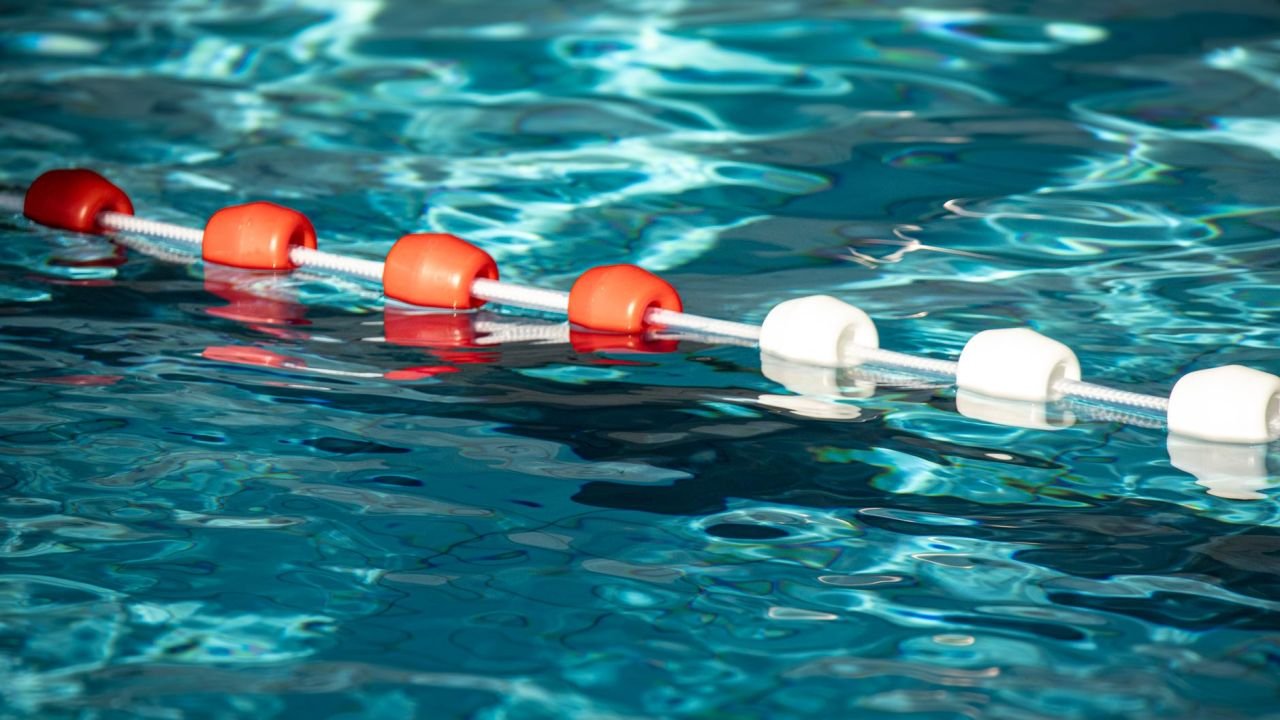
Photo: Juli Ane / Pexels
In this article
Exercise for lipedema is not a weight-loss intervention, and framing it that way is why so many women have abandoned it. Lipedema tissue does not respond to energy deficit. Movement is on the list for entirely different reasons, and the recommendation behind it is the strongest one in the guideline.
The German S2k guideline gives its highest grade — ↑↑, "shall", with 100% consensus — to the statement that movement in compression is an important element in pain relief and shall be included in the overall therapeutic concept. Note the phrasing: movement in compression. The garment and the activity are one prescription.
What movement is actually for here
Four mechanisms
- Pain reduction. The primary documented benefit, and the reason it is graded so highly.
- The muscle pump. Calf contraction is a major driver of venous and lymphatic return; a sedentary limb loses that assistance entirely.
- Joint protection. Strong quadriceps and glutes protect knees and hips that are already carrying an altered load.
- Mood and sleep, which in a condition with elevated rates of depression and anxiety is not a soft benefit.
Tier 1: water
Aquatic exercise is first-line in the sports-medicine consensus for lipedema, and the reason is mechanical rather than motivational. Water applies hydrostatic pressure to the whole immersed limb — compression you do not have to put on — while simultaneously removing most of the load from your joints. Nothing else does both.
The S2k guideline names water sports and aquacycling explicitly, and the international Delphi consensus put water-based activity among the highest-agreement recommendations alongside walking and yoga.
What to do: swimming at whatever pace suits you, walking lengths in chest-deep water, aqua-aerobics, aquacycling if a pool near you has bikes. Chest-deep is the useful depth — that is where the hydrostatic effect on the legs is greatest.
Frequency: two or three sessions a week is a realistic and worthwhile target. More on water specifically.
Tier 2: walking
Unglamorous and consistently recommended. In compression, on a flat route, at a pace where you could still hold a conversation.
Start where you actually are, not where an app thinks you should be. If ten minutes is what you can do without a pain flare tomorrow, ten minutes is the correct dose, and you build from there in small increments. A woman who walks 15 minutes six days a week is doing considerably better than one who walks an hour and then cannot move for three days.
In this climate: early morning or after sunset, or indoors. Heat management.
Tier 3: resistance work
The sports-medicine consensus recommends resistance training with particular emphasis on the quadriceps. Strong thigh muscles support the knee, and knee pain is one of the most common secondary problems in this condition.
Practical version, two or three times a week:
- Sit-to-stand from a chair. The single most transferable exercise there is. Sets of 8–12.
- Wall sits. Start with 15 seconds.
- Step-ups onto a low step.
- Heel raises — directly trains the calf pump.
- Glute bridges from lying.
- Resistance band work for the arms if you have arm involvement.
Moderate loads, controlled movement, breathing throughout. Nothing here requires a gym.
The breathing, which is not filler
Deep abdominal breathing appears in the exercise consensus specifically because the pressure change in the thorax draws lymph through the thoracic duct — it raises lymphatic flow, and it shifts you toward parasympathetic tone, which helps with pain.
Five minutes: lying down, one hand on the belly, breathe in through the nose so the hand rises, out slowly through the mouth. It is also the standard preparation before any drainage sequence. Self-drainage.
What to avoid, and why
| Avoid or modify | Reason |
|---|---|
| High-impact running and jumping | Joint load on already-stressed knees and hips. Not forbidden, but not the place to start. |
| Very heavy loads with breath-holding | Sharp intra-abdominal pressure spikes are unhelpful for lymphatic return. |
| Hot yoga, saunas, very hot baths | Heat causes vasodilation and worsens swelling. Why heat is a problem. |
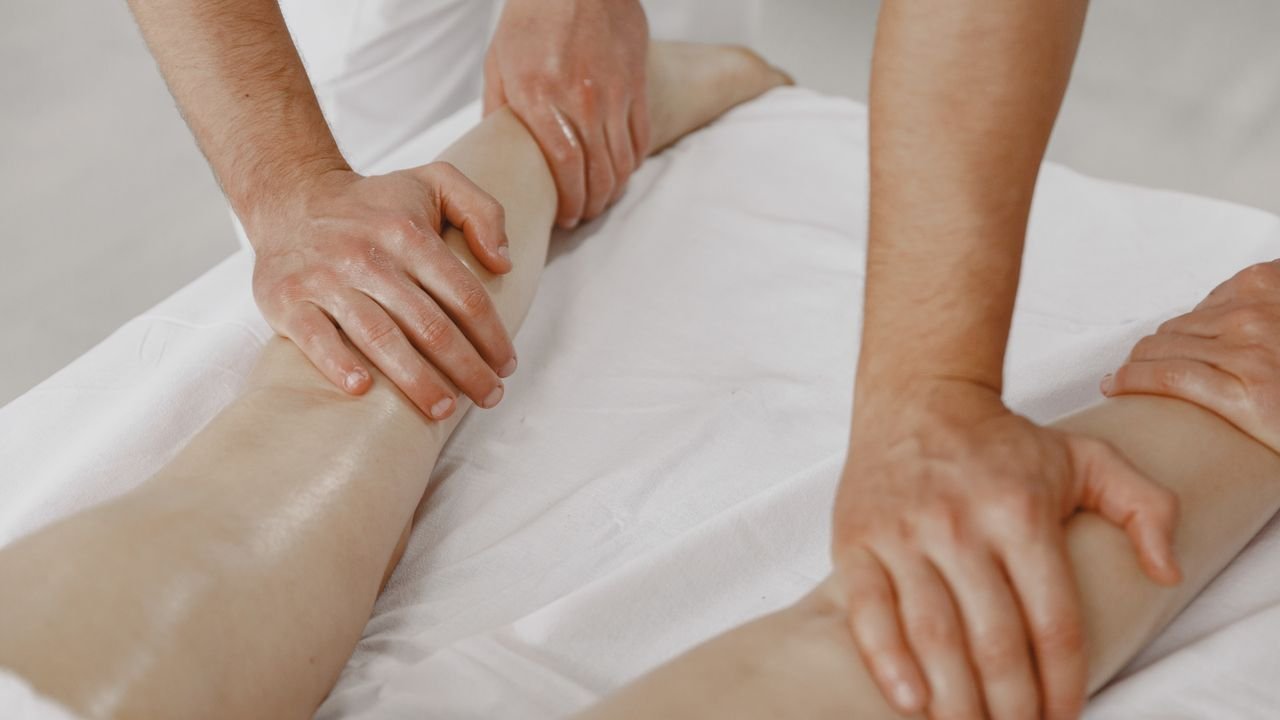
| Deep, forceful sports massage afterwards | Bruises easily-bruised tissue. Light drainage is the technique that belongs here. |
| Anything that leaves you unable to move the next day | Not discipline — a dosing error. Reduce and rebuild. |
Talk to a doctor before starting if you have known heart or lung disease, uncontrolled hypertension, a recent clot, active cellulitis, or if you are pregnant. And stop and seek help for chest pain, unusual breathlessness, or a sudden painful swollen calf.
Building it so it survives contact with real life
- Compression on first. The recommendation is movement in compression, not movement.
- Start at a dose you are certain you can repeat. Then add ten per cent a week.
- Measure the right outcome. Pain score, how your legs feel by evening, how far you can walk before you want to stop. Not the scale — it will lie to you about this.
- Elevate afterwards for ten minutes.
- Expect flat weeks. Premenstrually, in heat, after a bad night. A flat week is data, not failure.
The sentence to keep
You are not exercising to shrink your legs. Your legs are not going to shrink from this, and any programme that promises otherwise is misunderstanding the condition. You are exercising because it is the intervention with the strongest recommendation grade in the guideline for reducing your pain — and because a woman who moves regularly in compression is on a materially different trajectory from one who does not. What influences progression.
Questions people ask about this
What is the best exercise for lipedema?
Water-based activity is first-line in the clinical consensus, because water applies hydrostatic compression to the whole immersed limb while removing load from the joints — nothing else does both. After that, walking in compression on flat ground, and resistance work with emphasis on the quadriceps two or three times a week. The German S2k guideline gives movement in compression its strongest grade with 100% consensus, so the garment and the activity are one prescription, not two.
Should I avoid any exercise with lipedema?
Nothing is absolutely forbidden, but a few things are poor starting points: high-impact running and jumping load knees and hips that are already stressed; very heavy lifting with breath-holding creates pressure spikes that do not help lymphatic return; and hot yoga, saunas and very hot baths cause vasodilation that worsens swelling. Deep, forceful sports massage afterwards bruises tissue that already bruises easily — light drainage is the technique that belongs here.
How much exercise should I do with lipedema?
Start at a dose you are certain you can repeat, not the one an app suggests. If ten minutes of walking leaves you fine the next day, ten minutes is the correct dose, and you add roughly ten per cent a week. Two or three water sessions and two or three short resistance sessions a week is a realistic target. Anything that leaves you unable to move the following day is a dosing error, not a discipline problem.
Start where you are
You do not need a diagnosis, a plan, or a good week. You need somewhere to put the information so that in three months you can see what actually changed.
Create a free account