Why lipedema hurts, and what actually reduces the pain
Pain is what makes this a medical condition rather than a body shape — and it is the symptom most often left out of the conversation entirely. Here is the mechanism, and the interventions ranked by how much evidence stands behind each one.

Photo: Andrea Piacquadio / Pexels
In this article
Ask a woman with lipedema what bothers her most and the answer is very often not the size. It is that her legs ache by four in the afternoon, that a hug around the thighs from a child hurts, that she cannot sit cross-legged, that a physiotherapist's "firm but relaxing" massage made her cry.
Pain is one of the defining features of lipedema — present in the great majority of women with the condition — and it is the feature most likely to be left out of a consultation, because it sounds subjective and because women with this diagnosis have usually learned that describing symptoms invites advice about food.
Why it hurts
Several mechanisms are involved, and they are not fully mapped. What is reasonably established:
- Tissue pressure. The expanded fat layer holds fluid, and the increase in interstitial pressure loads pain receptors that would otherwise be quiet.
- Inflammation. Lipedema adipose tissue shows an inflammatory profile — immune cell infiltration, inflammatory signalling — and inflamed tissue is more sensitive.
- Small-vessel fragility. The same capillary fragility that causes easy bruising contributes to microtrauma in the tissue.
- Nerve involvement. This is why manual lymphatic drainage is prescribed as a pain treatment: the German S2k guideline is explicit that its objective in lipedema is modulation of the group C nerve fibres, which are the slow, aching, poorly-localised pain fibres. That is a very good description of what lipedema pain actually feels like.
- Secondary musculoskeletal pain. Altered gait, knee valgus, hip and lower-back strain. This layer is often the largest one by the time a woman reaches stage 3, and it is treatable in its own right.
Pain does not track with stage. A woman at stage 1 can be in considerably more pain than a woman at stage 3. If a clinician tells you your pain cannot be that bad because your legs "do not look that bad", that is a reason for a second opinion. Stages and why they do not predict pain.
What lipedema pain feels like — the words that help in an appointment
Vocabulary matters here, because "my legs hurt" gets filed differently from an accurate description. Common presentations:
- Pressure pain. A thumb pressed into the thigh is genuinely unpleasant. Frequently the most specific finding.
- Aching heaviness that builds through the day and is worse after standing and in heat.
- Tenderness to touch — a hand resting on the leg, a child sitting on your lap, a seatbelt across the thigh.
- Burning or crawling sensations, often in the evening.
- Night discomfort that makes it hard to find a position.
- Pain that spikes premenstrually, which is a real and reported pattern.
What helps, ranked by evidence
1. Compression — the strongest recommendation there is
Compression is the single most consistently recommended conservative measure across every lipedema guideline. For pain specifically, the German S2k guideline gives its strongest grade (↑↑, "shall", 100% consensus) to the statement that movement in compression is an important element in pain relief and shall be included in the therapeutic concept.
Note the wording: movement in compression. The garment and the movement are one prescription, not two. How to get the garment right, how to actually get it on, and how to wear it in a Gulf summer.
2. Movement, particularly in water
Water gives you compression and unloads painful joints at the same time, which is why aquatic exercise is first-line in the exercise consensus for this condition and why the guideline names water sports and aquacycling explicitly. Walking and yoga are the other two activities with the highest agreement in the international Delphi consensus. The full movement guide and why water in particular.
3. Manual lymphatic drainage
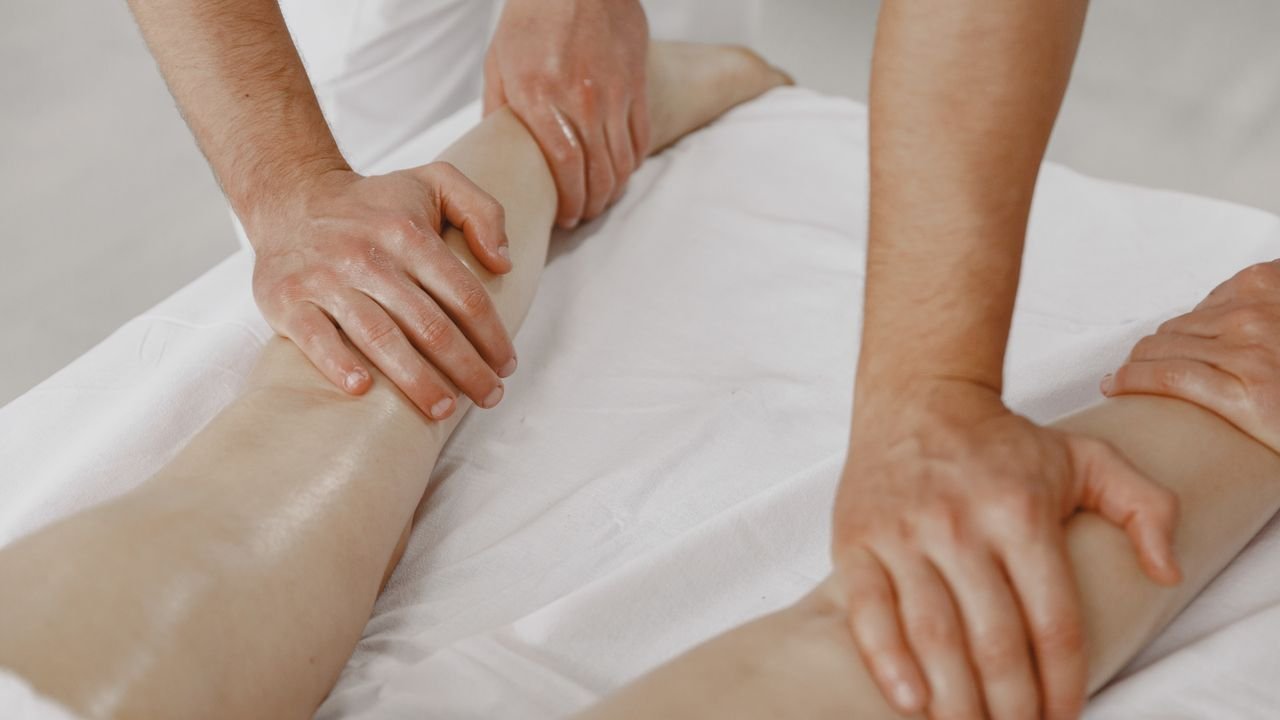
Prescribed for pain, not for size. Light enough that you cannot feel muscle under your hands — anything deeper is both ineffective and likely to bruise you. The technique and how to do a version of it yourself.
4. Diet, for the inflammatory and fluid components
Reduced pain is the most consistent finding in the small ketogenic-diet studies, and lowering sodium reliably reduces the evening heaviness. Neither removes the tissue. What the diet evidence says.
5. Vibration and other adjuncts
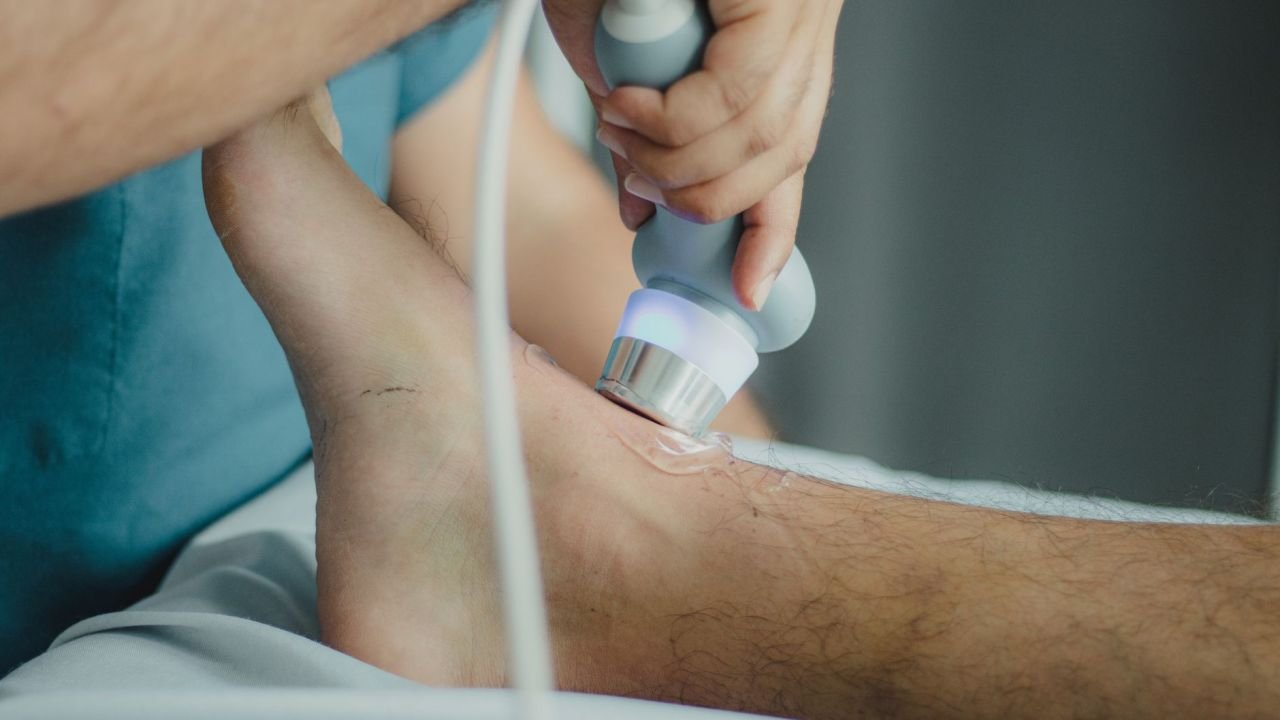
Whole-body vibration appears in the S2k guideline as a measure that may raise the pain threshold. It is an adjunct, not a foundation. Intermittent pneumatic compression pumps have a place for some women — the honest assessment.
6. Surgery
Lymph-sparing liposuction reduces pain substantially in the published series, and pain reduction — rather than appearance — is the outcome most consistently reported. It is a serious intervention with real requirements attached. What it involves.
Why ordinary painkillers underperform
Paracetamol and NSAIDs are frequently disappointing here, which women often interpret as evidence that the pain is not "real". It is not that. This is a mixed pain picture with a substantial non-inflammatory, nerve-mediated component, and simple analgesics do not address that component well. Long-term NSAID use also carries its own risks and is not a strategy for a chronic condition.
If pain is significant and persistent, that is a conversation with a doctor about a proper pain management plan — which may involve different drug classes, physiotherapy, and referral to a pain service. It is not something to solve alone with what is available over the counter.
A realistic daily baseline
- Compression on, most days, for most of the day.
- Twenty to thirty minutes of movement — in water when you can get it.
- Legs elevated for a spell in the evening.
- Sodium down, water up.
- Self-drainage a few times a week if it helps you.
- Heat managed — the summer makes all of this worse, and planning for that is not weakness.
Tracking it is not optional
Pain is invisible and memory is unreliable, and both of those work against you in a fifteen-minute appointment. A daily score out of ten, with a note of what you did, turns "it hurts a lot" into "it averages 6, it is 8 in the week before my period, and it drops to 4 on days I swim". The second sentence gets a treatment plan. The first gets advice about walking more.
And say the word pain, early, in every appointment. Lipedema is sometimes called lipalgia syndrome precisely because the pain is a core feature and not a complication. It belongs in the first sentence, not the last.
Questions people ask about this
Why does lipedema hurt so much?
Several mechanisms overlap: raised pressure in the expanded, fluid-holding fat layer; an inflammatory profile in the tissue itself; fragile small blood vessels producing microtrauma; and nerve involvement — the clinical guidelines describe manual lymphatic drainage as working by modulating the group C nerve fibres, which are the slow, aching pain fibres. On top of that sits secondary musculoskeletal pain from altered gait. Importantly, pain does not track with stage: a woman at stage 1 can hurt more than a woman at stage 3.
What is the fastest way to reduce lipedema pain?
The measure with the strongest backing is movement in compression — the German S2k guideline gives that its highest grade with 100% consensus, and the phrase is one prescription rather than two. Practically, that means a properly fitted garment worn most of the day plus twenty to thirty minutes of movement, with water-based exercise first choice because it compresses and unloads joints at once. Reducing sodium and elevating the legs in the evening both help within days.
Why do painkillers not work well for lipedema pain?
Because this is a mixed pain picture with a large non-inflammatory, nerve-mediated component, and simple analgesics like paracetamol and NSAIDs do not address that part well. It is not evidence that the pain is imagined. Persistent significant pain deserves a proper pain management plan from a doctor rather than escalating over-the-counter use, which carries its own risks over the long term.
Start where you are
You do not need a diagnosis, a plan, or a good week. You need somewhere to put the information so that in three months you can see what actually changed.
Create a free account