Dry brushing, wraps, ice baths: what is worth doing
A triage of everything that circulates in lipedema videos, sorted into three piles: worth doing, harmless if you enjoy it, and actively bad for this tissue.
Photo: David Kwewum / Pexels
In this article
Lipedema tips on social media arrive at a rate no clinician can match, and a woman who has been dismissed by three doctors is a reasonable audience for someone who at least takes her seriously. The problem is not that it is all wrong — some of it is genuinely good. The problem is that the confident and the useless are delivered in exactly the same tone.
So: three piles.
Worth doing
These have real support
- Compression garments. The best-evidenced conservative treatment there is. The guide.
- Water-based movement. First-line in the exercise consensus. Why.
- Light lymphatic self-drainage. A pain treatment with a documented objective, provided it is genuinely light. The technique.
- Leg elevation. Simple, free, works.
- Reducing sodium. Directly reduces the fluid component. More.
- Anti-inflammatory eating. Targets pain and inflammation, not the tissue. In our kitchen.
- Deep abdominal breathing. Raises lymphatic flow; part of the standard drainage sequence.
Harmless — do it if you like it, but know what it is
Dry brushing. Pleasant, cheap, and pushed hard in lipedema content. There is no evidence it changes lipedema. If it is gentle and you enjoy the ritual, there is no reason to stop. If you are brushing hard enough to redden the skin, you are irritating tissue that bruises easily for no return.
Cold showers and ice baths. Some evidence for general recovery and inflammation, none specific to lipedema. Pleasant relief in a Gulf summer. Not a treatment. Avoid extreme cold if you have Raynaud's or a circulatory condition.
Rebounding (mini-trampoline). Widely claimed to "move lymph". It is exercise, and exercise does move lymph, which is the same reason walking does. Nothing special about the trampoline, and the impact is a poor choice if your knees hurt. If you enjoy it and it does not hurt, it is fine movement.
Castor oil packs. No evidence for lipedema. Messy, harmless topically for most people.
Epsom salt baths. Magnesium is not meaningfully absorbed through skin in the amounts claimed. A warm bath is relaxing, which is a real benefit — but not a hot one, since heat worsens swelling. Why heat is a problem.
Elevation boards, wedge pillows. These work, but so does a stack of cushions. Buy if convenient, not because a video implied the angle is critical.
Actively unhelpful, and some of it harmful
| What you see | The problem |
|---|---|
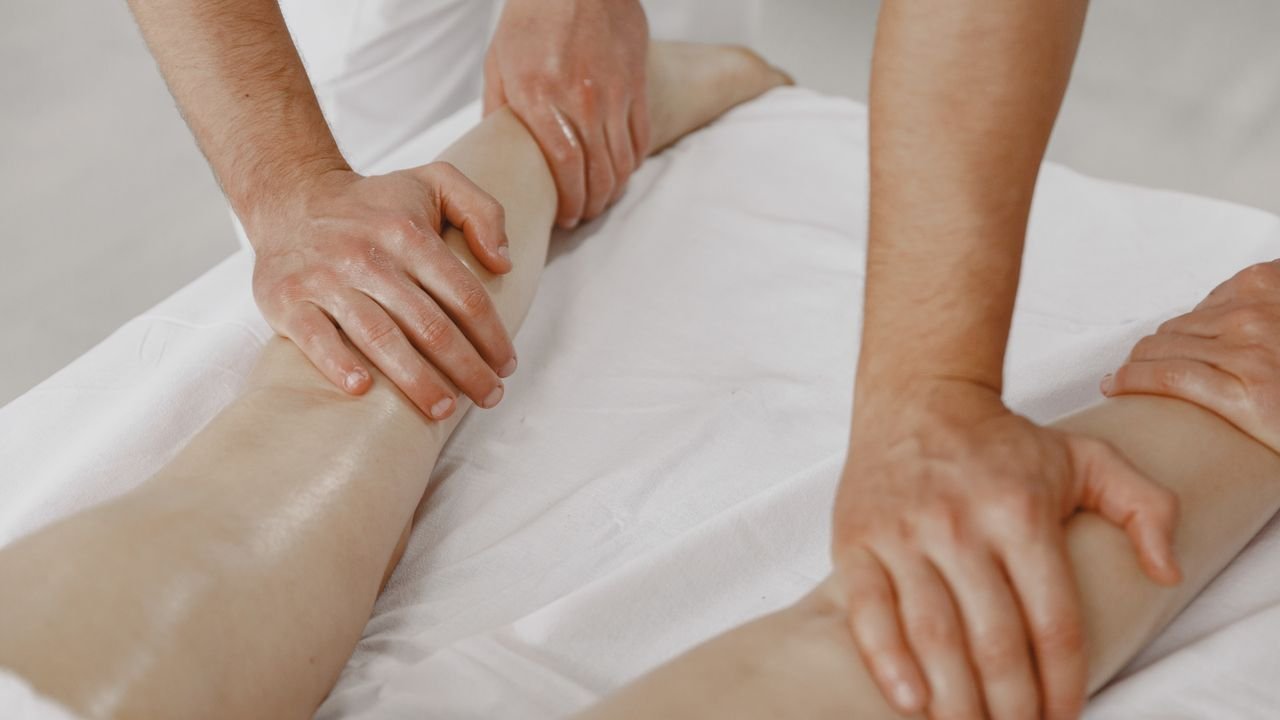
| Deep or aggressive "lymphatic" massage | Real MLD is light enough that you cannot feel muscle underneath. Deep work on this tissue causes bruising and pain, and the videos showing hard pressure and immediate "results" are showing tissue displacement, not drainage. |
| Wooden massage tools, "maderotherapy" | Same problem, with a harder implement. Marketed heavily in this region. |
| Body wraps for "inch loss" | Temporary fluid displacement, sold as fat loss. It returns within hours. |
| Herbal diuretics and detox teas | Diuretics are generally not recommended in lipedema. Some cause dependence and electrolyte problems. |
| Cavitation, radiofrequency, laser "fat melting" | No meaningful lipedema evidence, sold at high prices, some risk of harm. |
| Very-low-calorie and extreme fasting protocols | Aimed at tissue that does not respond, in a population with a high rate of disordered eating. Why that matters. |
| Before-and-after accounts | Selective, often surgical without disclosure, and the reference point for how you judge your own body should not be somebody else's best photograph. |
Four questions to run any claim through. Is the person selling something? Are they describing pain and function, or only appearance? Do they say what the evidence is, including when it is weak? And would this be safe on tissue that bruises easily and hurts under pressure? A "no" on the last one is enough on its own.
The part of social media that is genuinely valuable
It is not the protocols — most of those are the same handful of myths in new packaging. It is the recognition.
Most women find the word lipedema through a video, not through a doctor — and for a woman who has spent fifteen years being told she is not trying hard enough, seeing her own legs on someone else's screen with a medical name attached is a real event. Communities are also where practical knowledge lives: which fitter measures properly, which pool has women-only hours, which surgeon actually treats this condition.
Keep that. Filter the rest. The useful test is whether an account teaches you to ask better questions or teaches you to buy something.
What to do with a claim you are unsure about
- Check what it costs — money, time and, if it is aggressive, tissue.
- Check what it is aimed at. Pain, fluid or the tissue itself? Anything claiming to remove the tissue without surgery is claiming something no evidence supports.
- Ask your clinician or fitter. They will have heard of it; they hear about all of them.
- If you trial it, trial it properly. One change at a time, eight weeks, judged on a pain score and limb measurements rather than on how you felt the first evening. And not on the scale.
That process costs you very little and it settles most of these questions faster than another six hours of videos will. The treatments with real evidence, ranked.
Questions people ask about this
Does dry brushing help lipedema?
There is no evidence it changes lipedema. If it is gentle and you enjoy the ritual, there is no reason to stop — but if you are brushing hard enough to redden the skin you are irritating tissue that bruises easily, for no return. It sits in the "harmless if you like it" category alongside cold showers, rebounding, castor oil packs and Epsom salt baths, none of which is a treatment for this condition.
Are wooden massage tools and deep lymphatic massage safe for lipedema?
No. Real manual lymphatic drainage is light enough that you cannot feel muscle underneath your hands, because the vessels sit just below the skin. Deep work and wooden tools on this tissue cause bruising and pain rather than drainage, and videos showing hard pressure with immediate "results" are showing tissue displacement, not lymphatic flow. This is one of the more commonly harmful things circulating.
How do I judge a lipedema claim I see online?
Four questions: is the person selling something; are they describing pain and function or only appearance; do they say what the evidence is, including when it is weak; and would this be safe on tissue that bruises easily and hurts under pressure? A no on the last one settles it on its own. If you do trial something, change one thing at a time, give it eight weeks, and judge it on a pain score and limb measurements rather than how you felt the first evening.
Start where you are
You do not need a diagnosis, a plan, or a good week. You need somewhere to put the information so that in three months you can see what actually changed.
Create a free account